
28 November 2012
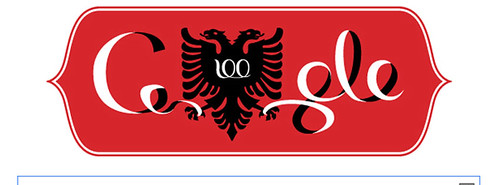
Google Doodle 100 Years Albania
This is how Google looks today on 28 November 2012 on the occasion of 100th Independence day of Albania. Thank you Google for honoring my country. It was the successful completion of a petition signed by some 75,000 thousands Albanian started by Klajdi Hena a young guy from Korca, Albania. Thank you to all supporters

31 October 2012
King and Shark
Learning to Drive and
Becoming a Real Driver
"The control and operation of a motor vehicle".
This is the definition written just underneath Driving, in on the
"D" section of the old and wise Oxford English Dictionary.
As a teenager growing up in most
parts of the world, among many dreams, driving is definitely in the top three. Along
with sexual fantasies and drinking alcohol, driving occupied a very big portion
of my daily thinking…: "A nice red
sports car, fancy alloys, black windscreen and leather seats. Maybe a Ford
Fiesta, that would do for me. Windows open, loud music filling my ears and the
ears of by-passers too. I am driving past the College entrance, one hand in the
wheel the other hand waving. All girls looking at me. I am the king of the road"
all perfect…But then you wake up and you realise that before you do that, there
is the "not exactly small matter" of passing the driving test. A huge
matter in the UK. You invest plenty of time and effort. First, the written test.
You have to study. Unlike your college study, for the written test you study
fanatically. Once the written test is over, you start driving for the first
time. That you are driving a car with two pair of breaks does not bother you.
You do not even mind the fact that a driving instructor is the one really controlling and operating the car, from
the passenger seat. By now the dream is on its way. You see the end of the
tunnel. After a few hours of that kind
of driving, you feel like you are ready to be in full control of the car. You
book the "reality check" with the driving authorities. All confident
you start driving the same car. Your instructor in his usual seat. Only, now a
gentlemen or a lady is sat at the back passenger seat. The driving evaluator is
all quiet. You can only hear the point of his/her pen rubbing the white paper.
The nerves get the better of you. The moves you have been doing with ease
earlier now are in vain. You are not in control of the car at all. The
inevitable hits you after returning to the starting point. Hearing it in such a
gentle and polite way makes it remarkably acceptable for you: 'You failed'.
You start to think that what is
the point of this driving test. Now you are annoyed. But the failure does not
put you off. You are disappointed but not beaten. It is a dream and you do not
give up easily. You start again. You already emptied your pockets, now the need
to do the same to your parent's pockets has arisen. Eventually, after doing the same process for a
few times, four times in my case to be more precise, you reach the promised
land. You pass. Now, if you have extremely rich parents who buy you a car, you
can go ahead and live the dream. Enjoy every bit of it. Be the King of the
road. And that is how it really feels, at least for the first year or so. After
the dust is settled and your excitement level while driving is back to standard
again, you realise the whole point of the driving test experience. It enables
you to really "control and operate
the car". Conditions and roads permitting. After driving for a few
years, enjoying it most of the time, you start to think that you are an expert
now. You have gasped all there is to driving. Years of experience, driven in
daylight and during the night, through rain and snow, in huge cities (London)
and small villages (Oxford, kidding!). Experience is priceless, now you are an
expert driver. Then, suddenly you have to travel abroad. To drive abroad, more
specifically. Depending on your luck, driving abroad can be a rather good
experience or a rather horrible one. In my case, absolutely and utterly
horrible. But rewarding and educative, at the same time.
I had to move to my home country,
Albania. I had to drive while there.
Gëzim, the old driver of the taxi
taking me from the airport to the centre of Tirana, the capital, tells me that
he has been driving for over 30 years. My response to him?: I see. What I am
really thinking?: Like this!, how come you are not dead, or in prison, or you
have two legs, or you have two arms, or you are not a pilot, … you get the
point. 'To me, you are not a driver
unless you have driven in Tirana" he says. "And you can only drive in Tirana after you have seen with your own eyes
how they drive here, for a few months" he continues. Yeah, right, I am
thinking. I have been through the toughest of driving tests and I have been
driving full-time for over 6 years, in all conditions and most of the time
through rain in London and Oxford. As the definition of the old and wise
dictionary says, I am in control and I fully operate the vehicle. I can handle
Tirana, I do not have to wait six months and then try to learn driving here. How
different can it be? I am an expert already.
Come to think of it now, Gëzim
was spot on. Oxford Dictionary definition is not applicable here, at least not
for the first few months. In Tirana, it seems like you are never in full
control of your vehicle and fully operating it. It is like other, undesirable
forces are present. Driving in Tirana is a whole new experience to most first
time visitors. Even to Italian taxi drivers, who are part of and experience
some amazing and dodgy driving habits in Italy. Even to worldwide experienced
drivers, who have driven in Baghdad, Kabul, Australia, Africa and New Zealand.
Even to "busy big city" drivers, who have driven through rush-hours
and early mornings in New York, Beijing, Johannesburg, Ibiza, Athens and Rio de
Janeiro. And of course, it was a whole new experience to me, a very modest
driver compared to the above mentioned categories. I needed time to come to
terms with it. Even more than six months. Tirana is big, but not a huge city by
all means. The way that people drive here is unique. It is really hard to
describe, indescribable actually as there are no patterns, no rules and no
logic. It has come about as a result of a remarkable blend. Until the 90's
there were hardly any cars in Tirana. But after the millennium car ownership
really took off. There are a huge numbers of cars now. Infrastructure is a
'work in progress', to say the least. Many roads are not in good conditions.
Road signs are to the limit of inexistence. Even in cases where there are road
signs, hardly anyone respects them. Then you have the drivers. A large number
learned to drive from practice. Some even started to drive as young as 10 year
olds. By 12 or 13 a large number hits the road, national roads, especially in
small cities and villages. Unlike me,
most of them did not go through a vigorous written and practical driving test. The
result: it is not that they can not drive, far from it, but most of them do not
have driving principles. Throw in their cultural and historical background and
'hot blooded' Balkanises and the blend becomes interesting. To complete the
blend, authorities play their part too. Law enforcement and driving authorities
are working hard. But a long time and plenty more efforts are needed to start
changing things.
As a result, if you watch the
cars in the streets of Tirana from above, it is like watching fish in the sea.
All going to different directions, all like completing their own private 'little'
mission. Setting their own rules as they go by. If you concentrate in one
particular road, it is like a river. You see plenty of fish travelling in both
directions through a wobbly line. Other fish are making their entry into the river
from either side, jumping at own will. Some are flying out of the river. No
signs given, no lines or borders to cross. And they are fish, they do not care
for traffic lights or indicators, no-one uses them as if there is no need. Or
as if indications are not permitted to be used by fish. Looking at a
roundabout, it is like looking at swimming pool. The fish inside are moving
slowly. They stop often to make way for fish thrown in from the diving board or
from the back door of the pool at 100 miles an hour. They have to carefully
check all diving boards around the pool and entrances and exits before they can
move again. If you are stuck in the middle of it and watching from the ground,
they do not seem like fish anymore. Each car seems like a shark. Coming and
going at speed. Tiny sharks and big sharks. Dirty sharks and fancy sharks. All
with their teeth out and racing each other. The terms: rules, standards, speed
limit, road signs, junctions, priority, do not apply to sharks. You realise, now,
you are a really little, tiny fish. You have to be careful not to be eaten. You
have to be brave to even move from one side to the other. You have to keep your
eyes open. You can not survive for long, so above all, you have to become a
shark. The only way you can survive. The only way you can drive in Tirana.
Becoming a shark is easier said
than done. To become a shark you have to grow watching other sharks. You have
to live in sharks territory, to come acquitted with the sea, the rivers and the
pools. You have to learn some of their skills and practice some of their moves.
Above all, you have to think like a shark. Fearless and predatory. Six months
is the least you need. Shark's nose,
instincts, behaviour, eyes and ears have to be vividly stored into your
mind. A King is useless here, only a
shark can survive. Once you become a shark, you remain a shark. You can go back
to King again if you want, but your shark-i-ness will never go away. It will be
stored safely. You will be able to call upon it when needed. No need for it
while driving in the UK though. Less than a King is fine there, but to drive in
Albania you have to be a shark.
Now as Gëzim said, sharks are
real drivers. I must be one. Only now I can fully agree with the definition of
the Oxford Dictionary again. I feel like I am in control and operating the
vehicle. In the UK, but even in shark territory, Albania.
Experience is priceless. I was a
King. Now I am also a shark.
EoT
Written by Emin Shini
The Albanian Moped trip: not exactly what
the Albanian media made of it.
Sunday morning. Off early to
work, way too early for a Sunday and carrying a hangover. Coffee in one hand,
local paper in the other. "How two young geniuses made a fortune"
is the headline. I am enjoying the article, hangover seems to be lying
somewhere else for a while, no room in my head while I am reading. It will
appear in a rush soon. I am reading slowly to keep it away for a bit longer.
The article tells about two Chinese chaps (students) who rented a house and
started a small 'plantation' business. Made a fortune in a couple of years.
Plenty of lines describing their bright business plan and how smoothly they
operated. There is even praise from the writer, describing their work as, hence
the headline 'the work of two geniuses'. For a minute I am thinking great stuff,
brilliant. Those two, real geniuses. Then I come to my senses, and the real
substance of the article fills my head: They planted weed and they were caught.
Jail beckons for them. How can that be geniuses?? They broke the law. Hangover
has not gone at all, it is affecting my thinking, I conclude.
Now I'm at home, enjoying the
evening in front of the TV, watching the BBC. Hangover dead and buried. To the
astonishment of my, now hangover free mind, I can not help it but to think that
those two chaps are a bit of 'gen' after all.
That article, rather the way it
was presented to me, made me think positively. That is what positive journalism
does to you sometimes. There is plenty of it around in the UK. UK, where the
fashion is negative journalism, that is the trend. However, there is always
room for positive journalism, still and often.
Fast forward a few years. I have
a beer in my hand. Starting to pile them by now. Expecting hangover to pay me a
visit tomorrow, Sunday of all days. But I am thinking positively, it is Sunday
and it is a day off. Beers to keep coming then. The team in red scores. It is
Albania, my country and I am watching on TV, at my home in Albania. We are
playing Iran, not exactly a great team. As I am about to take another drop of
the cold beer, my ears are hearing what the commentator is saying: "we
score, it is one-nil to Albania. The Iran defender slipped there. Twenty
minutes to go, can we hold on to the score". Now I am thinking, for God's
sake man, can you not praise the great shot from our striker? Can you not let
us enjoy the goal for a split second? And yes, 20 minutes to go, we can score
one or two more, can't we?. We are playing Iran, not Brazil. I mean, how bloody
negative can you be!! Just switch channel to RaiUno for a second and see Italy
score. The Italian commentator is going crazy, absolutely shouting his head out:
Gooaaaaaaaaaaaaaaaaaaaaaallllllllllllllllllllllllllllllllll. I'm thinking
Roberto Baggio is back playing again and scored a beauty. But guess what, their
striker scored from two yards out, with his arm and Italy is playing Andorra. The
striker is Inzaghi. Still a goal though, scored by his beloved national team!
As I am digesting it all, I can
not help it but to think that Albanians are generally negative by nature.
Something to do with our history, our social up-bringing. This is reflected by
Albanian journalists and Albanian media in general, who is way too negative to
the country, too unfair. I mean, I was astonished at the recent coverage of a video
from two Dutch tourists on Albanian media.
Two young guys took a road trip
in Albania, mainly south. And they made a video and posted it on Youtube. From
the wide coverage as seen on Albanian media, I gathered that the video was all
about a discovery they made, the village of Lazarat, near Gjirokastra. We Albanians
know all about that village. It has a long history and it is mostly known as a
weed plant factory. Yes, weed is planted all over the village and Albanian
authorities are trying to deal with it, for a long time now. Puzzling how a
village planted with weed made a huge impression to two Dutch nationals, so
huge that they posted a video just about it, nonetheless. I mean, Dutch and
weed. There should not be any impressions there, a lot of chemistry yes, but
not impressions. They have plenty of it in the Netherlands. It is like a tank
of beer influencing an Englishmen to make a video about it, rather than setting
about to drink half of it.
As it turns out, after watching
the full video the village made only a slight impression to them. However, there
were many absolutely amazing things they experienced, positive things about
Albania that made more of an impression to them. I discovered that there is a
whole lot more to the video they posted than the village of Lazarat. Mostly
great stuff. Albanian media did what they do best; they painted a rather bleak
and hugely negative picture of that video. Even though the subject of the video
is their country and event though the video is rather refreshing, original and
above all, very positive.
Daan Vonk and Theo Roelfols, looking to take an interesting and beautiful
trip, somewhere close and somewhere cheap, do a bit of research. Exploring Albania
fits the profile of their trip, they conclude. Cheap, and in Europe, close.
They fly into the country from Brussels. Once they land, they see that the
weather is gorgeous. Hot and sunny. Off to the capital, Tirana. They settle
down. Now they are looking to rent two mopeds, when they find out that they can
not rent mopeds they buy two, ready to be driven away , for 60.000 ALL (around
430 Euro). To them, that is cheap and that is great. They manage to move around
Tirana, on their own, exploring some nice places along the way. All done smoothly.
To me, that is something positive, isn't it?
Off they march, heading south. As
throughout the trip, they find out that almost every local they come across
strives to help them out. That is what the people in the first garage they
visit do, fix their moped right away. They stop at a youth centre to ask if
people know a place where they can sleep. The answer they received, after being
looked at intensively and interestingly at first, yes we know, you can sleep in
our home. So they do. They were welcomed in the house of a local. Enjoying
their time with the whole family. Having an insight of the real Albanian
family. All happy and all together. As part of the tradition, they even
received a little tour of the house. Above all they experience one of Albania's
best virtues, hospitality. Amazing hospitality. To me that is something
positive, isn't it?
On they go, riding their mopeds
on some good roads, bumpy roads and some 'being built' roads. Staying at cheap
hotels, modern hotels, with all necessities needed and with great service. They
come across the Albanian coast for the fist time. And they drive a moped
through it, 2 yards away from the sea. Hospitality is always present. They
drive a brand new, very expensive Mercedez. Owned by someone they just met, by
someone who does not speak English. They even have dinner together. Another
local takes them hunting the next day, again a local they just met. Hunting, no
course up front. No license needed. And all for free. Then there is the food.
In the restaurants and in local's houses. They eat amazing food. Very cheap
food in restaurants and free and traditional food in local's houses. Nice fish
and meet, fresh vegetable and fruits. Tasteful stuff. To me that is something
positive, isn't it?
Now they are in Vlora, enjoying
the sun and enjoying the beach. Their pockets exhausted very little as they pay
20 Euro for a sea view room. Then they set exploring parts of the south coast. To
their right is the sea, to their left greenery cleans the air. The real beauty
now hits them. The coast unveils in front of them. Absolutely amazing beaches.
Breathless views. You can not describe them, you have to see for yourself. As
they get a bit closer to the sea, they can catch a glimpse of the diverse
beaches and the crystal clear waters. They stop at a river, it is its starting
point and they are amazed. Stunning. To me this is all, more than positive,
isn’t it?
Off to Gjirokastra, a UNESCO
protected city. They opt not to explore the city. Instead they have a hair cut,
Albanian style. And plenty of beers. Nice local brands. All too cheap to their
eyes. They have a preview of what a tropical rain is like. And a preview of the
meaning of some Albanian hand signs. The next day, tropical style, the sun is
shining again. As they keep travelling, they pass by small villages and some
high mountains. The view always exquisite. And they feel the cool air. In 30
minutes they are now from a 34 degree environment to a 14 degree one. To me,
that is something very positive, isn't it??
Now through the old city of
Elbasan, they are back in Tirana. They enjoy their mopeds for the last time.
After washing them, they sell the mopeds for 220 Euro. So after riding through a
six day trip, seeing some wonderful places in the process, their loss is around
200 Euro. To them, well worth it. They had an amazing, original and priceless
experience. They discovered a beautiful country and they lived many wonderful
moment. Their journey was short and only covered a tiny part of Albania, but
their journey was amazing. And the video they posted was absolutely positive. Indisputably
positive.
Coming by me, an Albanian, always
tempted to be influenced by negatives, the video and their trip paints a beautiful
portrait of Albania, as it really is. If still in doubt, watch the video for
yourself:
EoT.
Written by Emin Shini
12 October 2012
The House of Congress of Manastir Finally in Google Map
Këtë verë vendosëm të vizitonim Bitolën në Maqedoni me mikun tim, Armand, pa fshehur faktin se një nga arsyet kryesore që na shtynte të vizitonim këtë qytet, ishte shtëpia ku u mbajt Kongresi i Manastirit në Manastir (sot Bitola) në 14 nëntor 1908 për përcaktimin e alfabetit të gjuhës shqipe. Bitola, megjithëse me 2 xhami të mëdha në qendër të saj e shumë elementë të tjerë kulturorë që tregonin se në atë qytet kishte dominuar popullsia shqiptare. Sot nuk flitej për dominim, por ishte e vështirë të hasje dikë që fliste shqip, të paktën në pamje të parë dhe për aq sa qëndruam dhe u interesuam ne. Këtu nuk flitet për nacionalizëm, por thjesht prisnim dhe na e kishte qejfi që përveç maqedonasve të gjenim lehtësisht edhe shqiptarë, në rrugë, në emërtime zyrtare të objekteve e rrugëve (siç qe në Shkup p.sh.), në biznese turistike apo të tjera, dhe mbi të gjitha në atë për të cilën ky qytet njihet ndërmjet shqiptarësh… Shtëpinë e Kongresit të Manastirit. Pyetëm shumë vendas që takuam (maqedonas kuptohet) dhe pothuajse askush nuk dinte gjë për të (të paktën të tilla qenë reagimet). Kërkuam në hartën e “Google” dhe nuk kishte asnjë gjurmë. Vetëm në Wikipedia kishte diçka rreth historisë, dhe disa foto, por asnjë ADRESË (?!). Si ka mundësi që gjithkush nga shqiptarët që ka qenë atje nuk shkruan në internet të paktën adresën e saktë të kësaj shtëpie historike për ne?! Si ka mundësi që shqiptarët e Bitolas (vendasit e hershëm të Manastirit) të parët, por edhe shqiptarët e tjerë të Maqedonisë nuk promovojnë këto vende historike të paktën në internet. Dhe pastaj ankohen gjithë ditën se po asimilohen dhe po u shkelen të drejtat, e po konsiderohen qytetarë të dorës së dytë?! Kush do ua qajë hallin e mbrojë të drejtat kur ata vetë nuk promovojnë vetveten nëpërmjet edhe këtyre simboleve historike-kulturore?!
Gjithsesi, me shumë të pyetura më në fund e gjetëm shtëpinë. Ishte një vilë e bukur nga jashtë, por e vetmja gjë që të kujtonte që ishte shtëpia e Kongresit të Manastirit ishin dy pllakate në të, një i vënë për 60-vjetorin dhe një tjetër më i vogël i vënë për 100-vjetorin e Kongresit të Manastirit. Asgjë më shumë! As ndonjë flamur, a ndonjë muze! Në katin e parë madje dukej sikur shiteshin objekte hidrosanitare, pra mund të ishte një dyqan që ishte i mbyllur. Për ironi ato ditë dëgjova që qeveria jonë do të harxhonte disa miliona euro për një muze të Bankës Shqiptare, ndërkohë që ato lekë mund të përdoreshin (mund të ishte bërë kjo punë edhe më parë) për blerjen e kësaj godine dhe kthimin e këtij objekti në një vend të nderuar të historisë shqiptare. Të paktën të konsiderohej një fakt i tillë, aq më tepër tani që festojmë edhe 100-vjetorin e Pavarësisë, i cili nuk do kishte ardhur pa pasur një gjuhë tonën e cila u caktua në këtë shtëpi.
Pasi i bëmë disa fotografi e shënuam adresën të cilën po e shkruajmë këtu që të mos vuajnë si ne ata që nuk e dinë dhe është: “Boulevard 1st of May, Nr 23, Bitola, Macedonia (FYROM)”. Në kthim vendosa të punoj për caktimin e pikës së këtij objekti historik në hartën e “Google”, e cila dihet që është burimi pothuajse i vetëm ku kërkohen me miliarda adresa çdo ditë në të gjithë botën. Pra diçka e domosdoshme për çdokënd që do të “gjendet” në kohët e sotme dhe një reklamë e jashtëzakonshme. Pas disa komunikimeve me vlerësuesit e adresave të reja që shtohen në “Google”, ndërmjet tyre edhe maqedonas, të cilët kërkonin që emërtimi zyrtar të shkruhej në maqedonisht dhe që “Kongresi i Manastirit” të përkthehej në “Kongresi i Bitolas”, sot kam kënaqësinë e jashtëzakonshme që të ndaj me te gjithë ju që lexoni shqip, lajmin që “Google” e pranoi vendosjen e pikës në hartë me emërtimin primar në anglisht!. Pra nga sot e tutje kushdo që do shkojë të vizitojë Shtëpinë e Kongresit të Manastirit, mjaft që të kërkojë në “Google” në anglisht “The House of Congress of Manastir in Bitola” ose edhe vetëm “Congress of Manastir” dhe do gjej në hartën e “Google” pikën se ku ndodhet kjo shtëpi, me adresën e saktë dhe disa foto që i bëra shtëpisë dhe pllakave në të. Pra mjaft ta printosh këtë hartë në internet apo të kesh një smartphone dhe nuk ke më nevojë të sillesh vërdallë për të gjetur arsyen kryesore për të vizituar Bitolën e sotme ose Manastirin e dikurshëm. Ka shumë objekte historike-kulturore të rëndësishme për Shqipërinë, si rasti i Shtëpisë së Kongresit të Manastirit që gjenden brenda apo jashtë kufijve të Shqipërisë të cilat nuk kanë piketimin e tyre në hartën e “Google”, ose e thënë ndryshe janë të harruara e larg vëmendjes të një tregu prej miliona turistësh. Prandaj ndihem mirë, që i bëra një dhuratë të vogël promovimit të kulturës dhe historisë sonë në këtë 100-vjetor të shpalljes së Pavarësisë, por mbi të gjitha dua të përcjell shembullin që të gjithë ne mund të bëjmë shumë për promovimin e kulturës tonë jo domosdoshmërish me para, por me pak sforco e shumë dashuri.
* Kliton Gërxhani
Tourism Consultant
source: Shqip Newspaper Albania
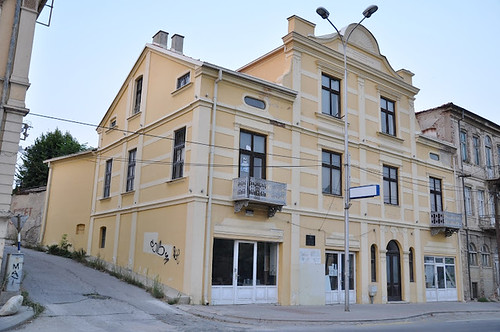
Gjithsesi, me shumë të pyetura më në fund e gjetëm shtëpinë. Ishte një vilë e bukur nga jashtë, por e vetmja gjë që të kujtonte që ishte shtëpia e Kongresit të Manastirit ishin dy pllakate në të, një i vënë për 60-vjetorin dhe një tjetër më i vogël i vënë për 100-vjetorin e Kongresit të Manastirit. Asgjë më shumë! As ndonjë flamur, a ndonjë muze! Në katin e parë madje dukej sikur shiteshin objekte hidrosanitare, pra mund të ishte një dyqan që ishte i mbyllur. Për ironi ato ditë dëgjova që qeveria jonë do të harxhonte disa miliona euro për një muze të Bankës Shqiptare, ndërkohë që ato lekë mund të përdoreshin (mund të ishte bërë kjo punë edhe më parë) për blerjen e kësaj godine dhe kthimin e këtij objekti në një vend të nderuar të historisë shqiptare. Të paktën të konsiderohej një fakt i tillë, aq më tepër tani që festojmë edhe 100-vjetorin e Pavarësisë, i cili nuk do kishte ardhur pa pasur një gjuhë tonën e cila u caktua në këtë shtëpi.
Pasi i bëmë disa fotografi e shënuam adresën të cilën po e shkruajmë këtu që të mos vuajnë si ne ata që nuk e dinë dhe është: “Boulevard 1st of May, Nr 23, Bitola, Macedonia (FYROM)”. Në kthim vendosa të punoj për caktimin e pikës së këtij objekti historik në hartën e “Google”, e cila dihet që është burimi pothuajse i vetëm ku kërkohen me miliarda adresa çdo ditë në të gjithë botën. Pra diçka e domosdoshme për çdokënd që do të “gjendet” në kohët e sotme dhe një reklamë e jashtëzakonshme. Pas disa komunikimeve me vlerësuesit e adresave të reja që shtohen në “Google”, ndërmjet tyre edhe maqedonas, të cilët kërkonin që emërtimi zyrtar të shkruhej në maqedonisht dhe që “Kongresi i Manastirit” të përkthehej në “Kongresi i Bitolas”, sot kam kënaqësinë e jashtëzakonshme që të ndaj me te gjithë ju që lexoni shqip, lajmin që “Google” e pranoi vendosjen e pikës në hartë me emërtimin primar në anglisht!. Pra nga sot e tutje kushdo që do shkojë të vizitojë Shtëpinë e Kongresit të Manastirit, mjaft që të kërkojë në “Google” në anglisht “The House of Congress of Manastir in Bitola” ose edhe vetëm “Congress of Manastir” dhe do gjej në hartën e “Google” pikën se ku ndodhet kjo shtëpi, me adresën e saktë dhe disa foto që i bëra shtëpisë dhe pllakave në të. Pra mjaft ta printosh këtë hartë në internet apo të kesh një smartphone dhe nuk ke më nevojë të sillesh vërdallë për të gjetur arsyen kryesore për të vizituar Bitolën e sotme ose Manastirin e dikurshëm. Ka shumë objekte historike-kulturore të rëndësishme për Shqipërinë, si rasti i Shtëpisë së Kongresit të Manastirit që gjenden brenda apo jashtë kufijve të Shqipërisë të cilat nuk kanë piketimin e tyre në hartën e “Google”, ose e thënë ndryshe janë të harruara e larg vëmendjes të një tregu prej miliona turistësh. Prandaj ndihem mirë, që i bëra një dhuratë të vogël promovimit të kulturës dhe historisë sonë në këtë 100-vjetor të shpalljes së Pavarësisë, por mbi të gjitha dua të përcjell shembullin që të gjithë ne mund të bëjmë shumë për promovimin e kulturës tonë jo domosdoshmërish me para, por me pak sforco e shumë dashuri.
* Kliton Gërxhani
Tourism Consultant
source: Shqip Newspaper Albania
16 September 2012
06 September 2012
The Telegraph: "Albania's surprising side" - By Edward Reeves, 02 September 2012
"Thank you Edward for this nicely describing of Albania. As the local partner of Voyages Jules Verne, Albania Holidays is proud to be part of this successful comeback of VJV after 20 years. There is a passionate and professional team working behind the curtains, who has carefully selected the main highlights of Albania and Tirana for those who would like just a short city break, and makes sure that each operational detail is well arranged. This article in The Telegraph – one of the main UK media companies, gives us a pleasant reward, but above all gives our country and Albanian tourism a precious promotion support."
Superb Roman ruins, glorious scenery, good food and ridiculously low prices – Edward Reeves finds much to admire in the former communist state.
This is odd. I'm sitting in a bar in Tirana, Albania, and there's not a gangster in sight. What there is is a 20ft-long counter packed with an array of enticing meats, a friendly man who grills them on request, and beer at 70p a glass. Everyone speaks English, and everyone is unfailingly nice. Could it be that there's a mismatch between Albania's reputation for – how to put this politely? – unconventional economic activity, and the modern-day reality? After a week travelling the country with my mother, without so much of a whiff of trouble or a gangster's cheap cologne, I'd say the answer is a resounding yes.
In fact, our Albanian trip has turned us both into bores when it comes to this oft-ignored Mediterranean country's virtues as a tourist destination. For those of you with a short attention span, the upshot of this article is "Go!" But first some context.
Our trip came about when I read that tour operator, Voyages Jules Verne (VJV), was returning to the country after a 20-year absence. Back in the late Eighties a VJV trip was the only way to visit Albania, which was ruled by a paranoid communist dictatorship that issued a few hundred visas each year. My intrepid, left-leaning mother went not once, but twice, in 1986 and 1987, flying into Titograd in the former Yugoslavia (now Podgorica, capital of Montenegro) and crossing the border at 3am under searchlights, as wolves howled in the distance. All books, magazines and other printed matter were confiscated by Kalashnikov-wielding guards and visitors had to walk through a sheep dip to kill capitalist germs. Welcome to Albania.
How times change. We fly direct into Tirana to begin VJV's new "Classical Tour of Albania" itinerary – and there's not a sheep dip in sight. The airport is clean and modern, with an even cleaner and more modern tour bus waiting 100 yards from the exit. Our guide, Elton Caushi, could be mistaken for an Italian art student. Young people, he says, acutely aware of Albania's reputation abroad, now avoid the dark, hired-killer look that was thought to be cool in the Nineties.
There's no hanging about – VJV's bumpf makes it clear that Albania's geography and poor road network dictate long coach journeys (and warns there's a fair degree of walking). First stop is the 18th-century monastery of Ardenica, sitting on a hill that the communist regime burrowed into and covered in bunkers and gun emplacements (Albania is peppered with bunkers – there are thought to be more than 700,000 of them). My mother didn't visit Ardenica on her previous trips – back then the church was used as a storeroom for military kit. The survival of its splendid iconostasis and frescoes, by two of Albania's finest icon painters, the brothers Konstandin and Athanas Zografi, is something of a miracle.
We spend the night at the town of Fier which, for the record, smells of petrol (it's near a refinery) and has nothing to offer even the most rosy-spectacled visitor. It's convenient, however, for the ruined city of Apollonia, which we visit the following morning. Truth be told, its most famous resident, Augustus, would be hard-pushed to recognise it.
But we have high hopes for our next historical site, Butrint, scheduled for the following morning. Trouble is, Butrint is far to the south, close to the Greek border. This means a day driving the Albanian Riviera, to Saranda, where we'll stay two nights. And it's a long drive – close on eight hours – but with stops for lunch to enjoy the view from the Llogaraja Pass and the fort built by Ali Pasha (of Byron fame) at Palermo Bay.
Scenery aside, the major point of interest is olive trees planted on a hillside to spell the name of Albania's unlamented dictator Enver Hoxha. My mother remembers the hills being festooned with such slogans, in white-painted stones. It was a way of imposing control, Elton explains – trusted communists might be ordered to paint "Enver"; the politically suspect would get phrases such as "United States Capitalist Imperialism is a Paper Tiger", which could take months. My mother looks crestfallen. "I assumed they were painted by grateful villagers," she says.
Butrint, we discover, is a magical site. In Italy it would be packed with visitors; we share it with a single coachload of elderly Germans. The ruins are spread over a small peninsula, and range from the fourth century BC through to the early 1900s (Ali Pasha had a hunting lodge here), via the Byzantine era. Terrapins sunbathe in the flooded theatre and bathhouse, crickets chirrup and eucalyptus leaves rustle gently in the breeze. All in all it's a very satisfactory place to spend a morning.
Next day we drive a couple of hours inland to the town of Gjirokastra. This Unesco World Heritage Site is utterly charming, with steep cobbled streets, crumbling Ottoman houses and a spooky castle. This is closer to the Albania my mother remembers, though with the addition of a small capitalist economy of craftsmen selling wood and stone carvings, and an eccentric shack of a restaurant, Kujtimi, where she's able to tuck into (delicious) frogs' legs.
It's worth mentioning that Albanian cuisine is generally good quality, and refreshingly cheap. Food had been an issue on my mother's last visit – in the Adriatic "resort" of Dürres her half-starved tour group had found just one café, which had to be opened specially by an aged crone who clearly believed everything the Hoxha regime told her about sulphurous Westerners. The menu had the advantage of simplicity: brown bread, served with a snarl.
After a night in Gjirokastra we embark on a second long drive, north to the town of Berati. This turns out to be another old-world charmer, with more tumbledown Ottoman houses piled either side of a river, and a beautifully preserved citadel with a glorious church, St Mary's, which is now a museum boasting some extraordinary frescoes. If you harbour ambitions of leaving the rat race and opening a boutique hotel, Berati is the place to do it. We pause en route to view the Roman ruins at Bylis (impressive) and for a snack in Fier (less impressive).
Final stop is Tirana, the capital, which turns out to be a friendly, buzzing place. There's too much to see and do in our short stay, which includes a day trip to nearby Kruja, the fortified town from which Albania's national hero Skanderbeg led the 15th-century resistance against the Turks. Enver Hoxha's daughter herself restored the castle and turned it into a shrine to Albanian nationalism. The big change, my mother says, is the cobbled bazaar, which was firmly shut on her last visit (back then VJV recommended £5 spending money for the entire week; all visitors could buy were translations of Hoxha's various masterworks). The bazaar is now piled high with communist detritus.
That night, in Tirana, we wander around Blloku, the old residential area for the nomenclature. Until communism fell, it was out of bounds to ordinary Albanians. Now it's packed with bars, cafés and fashionable young people having fun.
My mother is flabbergasted. Tirana in the mid-Eighties had been utterly dead. The only excitement came when an overweight man in brown flares and a garish rainbow-stripe jumper propositioned her in the loos of the Tirana International Hotel. She fought him off, and he was arrested in minutes. She has no doubt he was sent to a prison camp, or worse.
My mother proclaims she's going to come back and explore the north of the country, solo, at a more leisurely pace. She's sad that the socialist experiment failed, but her opinion of Albania – and Albanians – has changed completely.
"I used to think they were a dour, unsmiling bunch," she says, "but now they're all so friendly." Funny that.
Did you know?
Last year, Lonely Planet made Albania number one of its world's top 10 places to visit.
GETTING THERE
British Airways ( 0844 493 0787 ; ba.com) flies direct from Gatwick to Tirana from £157 return.
PACKAGES
Voyages Jules Verne ( 0845 166 7035 ; vjv.com) offers a seven-night Classical Tour of Albania from £895 per person, taking in Tirana, Saranda and Butrint, Gjirokastra, Berati and Kruja, including international flights, transfers, accommodation with two evening meals and breakfast daily. Alternatively, consider its three-night A Taste of Albania package, from £495.
WHEN TO GO
As with most Mediterranean destinations, spring and autumn are the best times to visit. If you’re visiting the Riviera, July and August see a big influx of visitors from elsewhere in the Balkans.
THE INSIDE TRACK
Forget all the clichés about Albanian gangsters – street crime is practically unheard of and you’re extremely unlikely to encounter any problems such as pickpocketing. Compared with any British city, Tirana feels incredibly safe – provincial cities even safer. Hotels are keenly priced, but there’s a shortage of quality accommodation. Expect eccentric décor and sometimes shambolic service. If you’re booking in Tirana, avoid hotels in the Blloku district. There’s always the chance you’ll find yourself next door to the latest club, with thumping bass until the early hours. Eating out is cheap by British and Eurozone standards, especially once you’re out of Tirana. Typical prices might be £1.15 for a salad or starter, £1.70 for a pasta dish, £3.40 for a meat dish and 90p for a pudding. Albanian wines were drinkable, even under communism, and are getting better and better every year. Generally a half-litre carafe of house red in a restaurant will be in the region of £2. If you want to splurge on a bottle, the finest, reputedly, is Cöbo’s Kashmer. Driving in Albania should hold no fear for competent drivers. However, the roads are often in a terrible state so opt for a 4 x 4 if your budget allows (though along the Riviera a hatchback will be fine). A nasty surprise is the price of petrol, which is comparable with Britain.
WHAT TO BRING HOME
If it’s on your itinerary, Kruja is the best place to do your shopping, with a bazaar selling kilims, handicrafts and communist memorabilia. The one Albanian universal seems to be homemade lacework, which local women sell at pretty much every (urban) historical site. Beautiful brass coffee grinders were made in Tirana until the fall of communism, and battered but functional ones can be picked up for around £5-£7, depending on condition. Look for the “Made in Albania” imprint on the bottom. Someone, probably Chinese, appears to be making replicas – they’re easily identifiable as they look brand new and have red Albanian flag stickers on the bottom. These sell for an outrageous €27 (£21) at the airport. Books by Enver Hoxha make great gifts, but English translations are collectors’ items (and priced accordingly). Other titles, such as Agriculture in the People’s Socialist Republic of Albania, at about £15, have wonderfully grainy pictures of fields, “hero” tractor drivers and scientists holding vegetables, accompanied by unintentionally hilarious captions. They’re not going to print any more socialist propaganda, so buy now to avoid disappointment. In Tirana there’s a great jewellery store selling semi-precious stones and tasteful silver jewellery, Koralia, on Rugga Abdyl Frashëri. Don’t expect anyone to speak English, but if you point at the stones you like, and then your ears, eventually the chap behind the counter will make you a pair of earrings on the spot, from about £5. A note on bargaining – you’re not in Morocco and the opening stated price is rarely extortionate, so bear that in mind.
Superb Roman ruins, glorious scenery, good food and ridiculously low prices – Edward Reeves finds much to admire in the former communist state.
This is odd. I'm sitting in a bar in Tirana, Albania, and there's not a gangster in sight. What there is is a 20ft-long counter packed with an array of enticing meats, a friendly man who grills them on request, and beer at 70p a glass. Everyone speaks English, and everyone is unfailingly nice. Could it be that there's a mismatch between Albania's reputation for – how to put this politely? – unconventional economic activity, and the modern-day reality? After a week travelling the country with my mother, without so much of a whiff of trouble or a gangster's cheap cologne, I'd say the answer is a resounding yes.
In fact, our Albanian trip has turned us both into bores when it comes to this oft-ignored Mediterranean country's virtues as a tourist destination. For those of you with a short attention span, the upshot of this article is "Go!" But first some context.
Our trip came about when I read that tour operator, Voyages Jules Verne (VJV), was returning to the country after a 20-year absence. Back in the late Eighties a VJV trip was the only way to visit Albania, which was ruled by a paranoid communist dictatorship that issued a few hundred visas each year. My intrepid, left-leaning mother went not once, but twice, in 1986 and 1987, flying into Titograd in the former Yugoslavia (now Podgorica, capital of Montenegro) and crossing the border at 3am under searchlights, as wolves howled in the distance. All books, magazines and other printed matter were confiscated by Kalashnikov-wielding guards and visitors had to walk through a sheep dip to kill capitalist germs. Welcome to Albania.
How times change. We fly direct into Tirana to begin VJV's new "Classical Tour of Albania" itinerary – and there's not a sheep dip in sight. The airport is clean and modern, with an even cleaner and more modern tour bus waiting 100 yards from the exit. Our guide, Elton Caushi, could be mistaken for an Italian art student. Young people, he says, acutely aware of Albania's reputation abroad, now avoid the dark, hired-killer look that was thought to be cool in the Nineties.
There's no hanging about – VJV's bumpf makes it clear that Albania's geography and poor road network dictate long coach journeys (and warns there's a fair degree of walking). First stop is the 18th-century monastery of Ardenica, sitting on a hill that the communist regime burrowed into and covered in bunkers and gun emplacements (Albania is peppered with bunkers – there are thought to be more than 700,000 of them). My mother didn't visit Ardenica on her previous trips – back then the church was used as a storeroom for military kit. The survival of its splendid iconostasis and frescoes, by two of Albania's finest icon painters, the brothers Konstandin and Athanas Zografi, is something of a miracle.
We spend the night at the town of Fier which, for the record, smells of petrol (it's near a refinery) and has nothing to offer even the most rosy-spectacled visitor. It's convenient, however, for the ruined city of Apollonia, which we visit the following morning. Truth be told, its most famous resident, Augustus, would be hard-pushed to recognise it.
But we have high hopes for our next historical site, Butrint, scheduled for the following morning. Trouble is, Butrint is far to the south, close to the Greek border. This means a day driving the Albanian Riviera, to Saranda, where we'll stay two nights. And it's a long drive – close on eight hours – but with stops for lunch to enjoy the view from the Llogaraja Pass and the fort built by Ali Pasha (of Byron fame) at Palermo Bay.
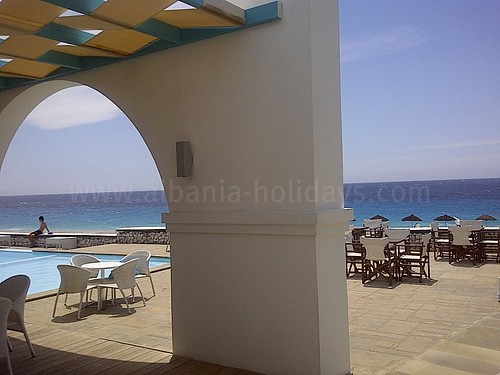 |
| Drymades beach, Albanian Riviera |
Scenery aside, the major point of interest is olive trees planted on a hillside to spell the name of Albania's unlamented dictator Enver Hoxha. My mother remembers the hills being festooned with such slogans, in white-painted stones. It was a way of imposing control, Elton explains – trusted communists might be ordered to paint "Enver"; the politically suspect would get phrases such as "United States Capitalist Imperialism is a Paper Tiger", which could take months. My mother looks crestfallen. "I assumed they were painted by grateful villagers," she says.
Butrint, we discover, is a magical site. In Italy it would be packed with visitors; we share it with a single coachload of elderly Germans. The ruins are spread over a small peninsula, and range from the fourth century BC through to the early 1900s (Ali Pasha had a hunting lodge here), via the Byzantine era. Terrapins sunbathe in the flooded theatre and bathhouse, crickets chirrup and eucalyptus leaves rustle gently in the breeze. All in all it's a very satisfactory place to spend a morning.
Next day we drive a couple of hours inland to the town of Gjirokastra. This Unesco World Heritage Site is utterly charming, with steep cobbled streets, crumbling Ottoman houses and a spooky castle. This is closer to the Albania my mother remembers, though with the addition of a small capitalist economy of craftsmen selling wood and stone carvings, and an eccentric shack of a restaurant, Kujtimi, where she's able to tuck into (delicious) frogs' legs.
It's worth mentioning that Albanian cuisine is generally good quality, and refreshingly cheap. Food had been an issue on my mother's last visit – in the Adriatic "resort" of Dürres her half-starved tour group had found just one café, which had to be opened specially by an aged crone who clearly believed everything the Hoxha regime told her about sulphurous Westerners. The menu had the advantage of simplicity: brown bread, served with a snarl.
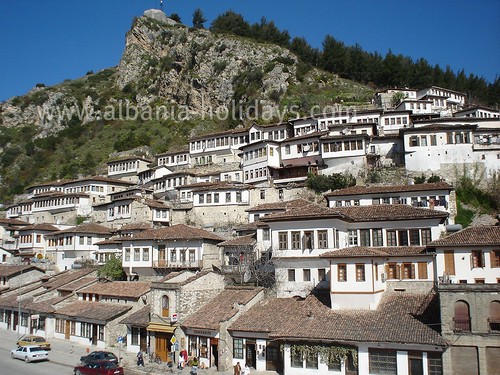 |
| Berat Albania |
Final stop is Tirana, the capital, which turns out to be a friendly, buzzing place. There's too much to see and do in our short stay, which includes a day trip to nearby Kruja, the fortified town from which Albania's national hero Skanderbeg led the 15th-century resistance against the Turks. Enver Hoxha's daughter herself restored the castle and turned it into a shrine to Albanian nationalism. The big change, my mother says, is the cobbled bazaar, which was firmly shut on her last visit (back then VJV recommended £5 spending money for the entire week; all visitors could buy were translations of Hoxha's various masterworks). The bazaar is now piled high with communist detritus.
That night, in Tirana, we wander around Blloku, the old residential area for the nomenclature. Until communism fell, it was out of bounds to ordinary Albanians. Now it's packed with bars, cafés and fashionable young people having fun.
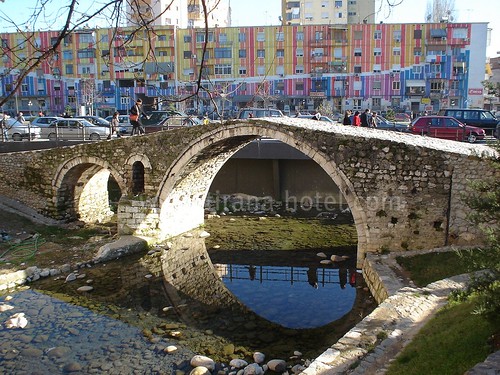 |
| Tirana, Albania |
My mother proclaims she's going to come back and explore the north of the country, solo, at a more leisurely pace. She's sad that the socialist experiment failed, but her opinion of Albania – and Albanians – has changed completely.
"I used to think they were a dour, unsmiling bunch," she says, "but now they're all so friendly." Funny that.
Did you know?
Last year, Lonely Planet made Albania number one of its world's top 10 places to visit.
GETTING THERE
British Airways ( 0844 493 0787 ; ba.com) flies direct from Gatwick to Tirana from £157 return.
PACKAGES
Voyages Jules Verne ( 0845 166 7035 ; vjv.com) offers a seven-night Classical Tour of Albania from £895 per person, taking in Tirana, Saranda and Butrint, Gjirokastra, Berati and Kruja, including international flights, transfers, accommodation with two evening meals and breakfast daily. Alternatively, consider its three-night A Taste of Albania package, from £495.
WHEN TO GO
As with most Mediterranean destinations, spring and autumn are the best times to visit. If you’re visiting the Riviera, July and August see a big influx of visitors from elsewhere in the Balkans.
THE INSIDE TRACK
Forget all the clichés about Albanian gangsters – street crime is practically unheard of and you’re extremely unlikely to encounter any problems such as pickpocketing. Compared with any British city, Tirana feels incredibly safe – provincial cities even safer. Hotels are keenly priced, but there’s a shortage of quality accommodation. Expect eccentric décor and sometimes shambolic service. If you’re booking in Tirana, avoid hotels in the Blloku district. There’s always the chance you’ll find yourself next door to the latest club, with thumping bass until the early hours. Eating out is cheap by British and Eurozone standards, especially once you’re out of Tirana. Typical prices might be £1.15 for a salad or starter, £1.70 for a pasta dish, £3.40 for a meat dish and 90p for a pudding. Albanian wines were drinkable, even under communism, and are getting better and better every year. Generally a half-litre carafe of house red in a restaurant will be in the region of £2. If you want to splurge on a bottle, the finest, reputedly, is Cöbo’s Kashmer. Driving in Albania should hold no fear for competent drivers. However, the roads are often in a terrible state so opt for a 4 x 4 if your budget allows (though along the Riviera a hatchback will be fine). A nasty surprise is the price of petrol, which is comparable with Britain.
WHAT TO BRING HOME
If it’s on your itinerary, Kruja is the best place to do your shopping, with a bazaar selling kilims, handicrafts and communist memorabilia. The one Albanian universal seems to be homemade lacework, which local women sell at pretty much every (urban) historical site. Beautiful brass coffee grinders were made in Tirana until the fall of communism, and battered but functional ones can be picked up for around £5-£7, depending on condition. Look for the “Made in Albania” imprint on the bottom. Someone, probably Chinese, appears to be making replicas – they’re easily identifiable as they look brand new and have red Albanian flag stickers on the bottom. These sell for an outrageous €27 (£21) at the airport. Books by Enver Hoxha make great gifts, but English translations are collectors’ items (and priced accordingly). Other titles, such as Agriculture in the People’s Socialist Republic of Albania, at about £15, have wonderfully grainy pictures of fields, “hero” tractor drivers and scientists holding vegetables, accompanied by unintentionally hilarious captions. They’re not going to print any more socialist propaganda, so buy now to avoid disappointment. In Tirana there’s a great jewellery store selling semi-precious stones and tasteful silver jewellery, Koralia, on Rugga Abdyl Frashëri. Don’t expect anyone to speak English, but if you point at the stones you like, and then your ears, eventually the chap behind the counter will make you a pair of earrings on the spot, from about £5. A note on bargaining – you’re not in Morocco and the opening stated price is rarely extortionate, so bear that in mind.
16 August 2012
Visit Balkans, hotels and accommodation in Balkans, tour to Balkans
Dear visitors,
We share the joy of introducing the newest website for hotels in Balkans. www.balkan-hotel.com is managed by Albania Holidays along with www.albania-hotel.com, www.albania-holidays.com and www.tirana-hotel.com.
It comes with a modern design and a lot more new features to make your booking easy and secure. It will offer accommodation in Albania, Bosnia hotels, hotels in Croatia, beach hotels in Greece, Kosovo hotels hotels and tours in Montenegro, Macedonia, Serbia hotels, hotels in Bugaria and Turkey hotels. We are populating our database to offer you a wide range of hotels in Balkans.
Keep visiting www.balkan-hotel.com and let us know what you think,
Thanks for visiting
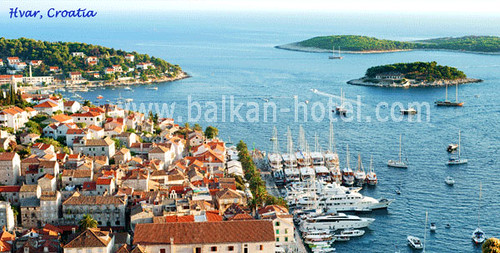
We share the joy of introducing the newest website for hotels in Balkans. www.balkan-hotel.com is managed by Albania Holidays along with www.albania-hotel.com, www.albania-holidays.com and www.tirana-hotel.com.
It comes with a modern design and a lot more new features to make your booking easy and secure. It will offer accommodation in Albania, Bosnia hotels, hotels in Croatia, beach hotels in Greece, Kosovo hotels hotels and tours in Montenegro, Macedonia, Serbia hotels, hotels in Bugaria and Turkey hotels. We are populating our database to offer you a wide range of hotels in Balkans.
Keep visiting www.balkan-hotel.com and let us know what you think,
Thanks for visiting
Subscribe to:
Posts (Atom)