15 November 2011

A Mark of Quality for Albanian Tourism

Albania Holidays has been, and still is, one of the main supporters of this USAID project, which will help putting Albanian tourism back into international standards. Projects such as Quality Mark help classifying tourism businesses in Albania and diminish informality. Soon we will publish at our hotel websites www.albania-hotel.com and www.tirana-hotel.com which hotels are awarded the respective Quality Mark, adding in this way another professional source for tourists to find the right hotels. Below the article:
Country's first Quality Mark boosts membership and advocacy efforts of fledgling sector
A Mark of Quality for Albanian Tourism
Logo Authentic Albania
The visual identity of the Authentic Albania Quality Mark program was developed based on motifs placed on ancient Illyrian vases and amphora, as well as ornamental designs used in Albanian traditional folk costumes. The key symbolizes Albanian hospitality.
"This helps members set themselves apart in terms of quality."
For a small Balkan country that just 20 years ago was completely closed to foreigners, Albania has come a long way to overcome its isolation, building both infrastructure and a reputation for hospitality that has grown a burgeoning travel industry. In fact, Lonely Planet travel guides currently list Albania as one of this year's top 10 travel and tourism destinations in the world.
USAID began work with the Government of Albania and its tourism industry (or ATA) in 2003 to promote the country's image and strengthen tour operator competition. In 2010, in partnership with the ATA, USAID's Rritje Albania ("Grow Albania") project launched the industry's first quality certification system for hotels and guesthouses: the Authentic Albania Quality Mark. USAID has supported assessor training and the design and promotional campaign.
So far, over 60 hotels and guesthouses have applied to the program to have their facilities and services evaluated based on the international hospitality standards and Global Sustainable Tourism Criteria that govern receipt of the Quality Mark. In April 2011, ATA awarded its first 20 Quality Marks to those businesses meeting its standards. The program is encouraging better business practices and providing recipients with an extremely effective publicity campaign.
"This is becoming one of our association's most visible and effective programs," said ATA's executive director, Ms. Matilda Naco. She added, "There is evident value in the Quality Mark for businesses because it helps members set themselves apart in terms of quality. […] It is increasingly important that we can advocate for sustainable tourism development at the national level. This must be the future of tourism in Albania."
USAID has been an important partner in the development of tourism sector since 2003, helping promote Albanian tourism, working with small and medium enterprises in the tourism sector, as well as the ministry to improve Albania's image as a desirable tourist destination.
The Agency will continue to support Rritje Albania until 2013, at which time local tourism authorities will assume full ownership.

11 November 2011

Frommer's Top Value Destination in 2012: Albanian Riviera !

Being still the Lonely Planet’s Nr.1 country to visit this year, it’s a pleasure to see Frommers confirming this by choosing Albania as 2012 Top Value Destination. Albania Holidays offers you the possibility to travel to Albania, while with www.albania-hotel.com you can book online a hotel in Albanian Riviera. Below the article:

Top Value Destination: Albanian Riviera


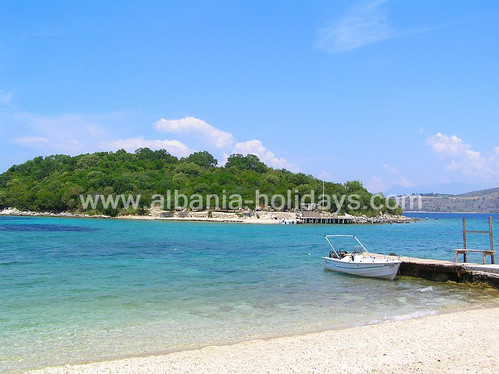
Unsung, undeveloped and eminently affordable, the Albanian Riviera has all the natural attractions of its Croatian counterpart further north but without the crowds and considerable expense. Here you have white-sand beaches, crystal-clear waters, and Mediterranean villages barely changed since long before King Zog.
A coastal road, reconstructed in 2009, allows you a relaxed and jaw-dropping drive from the Llogara National Park in the north to Lukovë, close to Corfu, in the south.
The black pines and Bulgarian firs of Llogara is where Caesar pursued Pompey the Great. Golden eagles and griffon vultures still fly overhead today, above chamois and European wildcats. Paragliding and hiking provide peaceful recreation in a landscape dotted with lemon groves, olive plantations, and castles built by medieval Sultans intent on taking Corfu. Spit-roasted lamb and honey tea, perhaps sourced within earshot, provide memorable sustenance.
Borsh is considered the warmest spot in Albania. Romans, Greeks and Venetians scrapped for its three-mile-long beach, the longest on Albania's Ionian coast. The Greeks stayed put in Himarë, a sleepy hamlet of authentic tavernas, Orthodox churches and a bizarre dialect of archaic Greek no longer spoken in Athens. This is genuinely Greece as it once was.
In nearby verdant Qeparo, Greeks and Albanians live amid olive groves planted before Napoleon, positioned above a beautiful beach you'll barely have to share.
For real isolation, swim between the four Ksamili Islands just south of Sarandë in Albania's extreme southwest, blessed with a beachside bar, maybe two. From the littoral you could walk to Greece but, then again... why would you?
Read more: http://www.frommers.com/micro/2011/top-destinations-2012/top-value-destination-albanian-riviera.html#ixzz1dR7kRrLb

02 July 2011

New York Times, On the Albanian Riviera

albania-hotel.com is recommended by The New York Times' travel magazine for online booking of hotels in Albania. This is the quote
" Few hotels and fewer private rooms have Web sites, though those intent on booking online will have some luck on www.albania-hotel.com"
The New York Times, On the Albanian Riviera, a Frugal Paradise, 29 June 2011

On the Albanian Riviera, a Frugal Paradise


Just past the tiny village of Ilias, on the two-lane highway that weaves through the Ceraunian Mountains, a sign pointing down a narrow road indicated a monastery about two kilometers on.
The Frugal Traveler’s Mediterranean Trip
seth
Follow me on Facebook or on Twitter.
“Why not?” I thought, putting on the turn signal of my rental car. I had no agenda other than to seek out adventure along the very affordable 80-mile stretch of beaches and villages between the cities of Vlore and Sarande, an area known as the Albanian Riviera.
But the road ended at a hilltop house where an old woman dressed in black stared at me quizzically.
“Monastiri?” I said in a hapless attempt at an Albanian accent in what I later discovered was a largely Greek-speaking region.
She pointed in the direction of the way I had come and seemed to signal that I had missed a turn. Back toward the main road, I found a severely rutted turnoff, grabbed a camera and sunglasses from the car, and started hiking. Travel fantasy mode kicked in. Would the monks invite me to dinner? Let me stay on a cot for the next few days if I did chores? Ask my opinion about their latest batch of ale?
They would not, because there was no monastery at the end of that road either. Instead, there was an idyllic pebbly beach where an otherwise inaccessible canyon opened up to the deep blue Ionian sea. There was not a soul in sight.
Bunkers along the coast put in place by Enver Hoxha, the isolationist leader of cold war-era Albania.
Seth Kugel for The New York Times-Bunkers along the coast put in place by Enver Hoxha, the isolationist leader of cold-war-era Albania.
Near the beach were a number of mushroom-shaped bunkers that the isolationist dictator Enver Hoxha, who died in 1985, installed across the country to defend it against a foreign attack that never came. There were more recent artifacts too: a newspaper horoscope page dated a few days earlier and plenty of soda and beer bottles that indicated the beach had been used much more recently for purposes other than defense.
But today, I thought to myself, it’s all mine. With my bathing suit back in the car, I stripped naked and dived into crystal blue waters, registering the scene in my internal archive of top travel moments. It was only as I came out of the water that I spotted two sunburned Austrian tourists hidden under a rock outcropping reading paperbacks, or pretending to as they laughed at me. (I went over to chat with them, pretending nothing was out of the ordinary.)
Gjipe Beach.
Seth Kugel for The New York Times--Gjipe Beach.
O.K., the Austrians had slightly sullied my afternoon at Gjipe Beach, as I later found out it was called. But at least in budget terms, Albania was surely the best stretch of the six-week-old Frugal Mediterranean adventure. For the first time, 500 euros a week easily paid for everything I wanted, starting with a confusing but not torturous seven-leg bus ride from Dubrovnik, Croatia, just 300 miles away. (Short of hiring taxis, I can’t figure out a more efficient way to do it, and despite language barriers drivers were thoughtful in making sure I got to the next bus.) I also rented a car for four days and private rooms from local families every night. I ate huge restaurant meals topping out at around 8 euros, and guzzled espressos and spring waters at beachfront cafes with glorious views. Still, I didn’t even come close to hitting my budget. (Though it would have been a bit tougher in July or August, when many rooms cost more.)
For most travelers the starting point of the Albanian Riviera is Vlore, a somewhat tacky city with lots of outdoor cafes that have fancy cushions but too much mindless club music; the cluttered, unattractive coastline has mediocre if bustling hard-sand beaches. There’s a certain amount of chaos in Vlore – virtually no signs giving street names, nutty drivers, ugly and seemingly stalled concrete construction projects. But that’s not really surprising in a country that’s still one of the poorest in Europe and only a quarter century removed from the Communist dictatorship of Hoxha. If Albania no longer feels isolated or scary, it still seems to be finding its way.
In a park along the main drag of Vlore, men huddle around an intensely contested game of chess.Seth Kugel for The New York TimesIn a park along the main drag of Vlore, men huddle around an intensely contested game of chess.
There were two highlights in Vlore: a park along the main drag, Bulevardi Vlore-Skele, where old men smoked like chimneys around intensely contested games of chess and dominoes and warmly welcomed a visitor with a camera.
And then there was the Museum of Independence, in the two-story house where Ismail Qemali ruled as the first prime minister after the country gained independence from the Ottoman Empire in 1912. As the lone visitor that afternoon I was rewarded with a personal tour by the director, Ilia Cano, who made a valiant attempt to explain the history in poor English mixed with French. (He also let me sit at Qemali’s desk and pretend to sign documents with his quill pen.)
I stayed in Vlore on the first and last nights of the week, but the trip’s real payoff came in the string of small towns that start once you drive up and over the perilously steep and forest-lined roads of Llogara National Park. After asking around about prices of hotels and private rooms in a few towns, I chose Himare as my base. A young man named Simos whose family runs the Internet cafe offered me a large apartment attached to his house, practically in the center of town, for 20 euros a night. (The Albanian currency is actually the lek, at 142 leke per euro or 96 per dollar, but lodging and car rental are often quoted in euros.) Himare didn’t have the best beaches, but it impressed me with cafes overlooking the water and souvlaki stands galore. And it won my heart forever when I spotted a man leading a donkey through town, trying to unload two baaing baby goats slung over its back to the highest bidder.
Warm feta with olive oil, peppers and tomatoes at Taverna VironSeth Kugel for The New York TimesWarm feta with olive oil, peppers and tomatoes at Taverna Viron.
My favorite place in town was the family-run Greek restaurant Taverna Viron. I had three dinners there, attended by Amalia, the English-speaking 15-year-old daughter of the owners, who was very sweet but not so helpful in helping pick the from the menu. Everything, she said, was “so delicious.”
Then again, she was right: pork chops with tzatziki and potatoes, shrimp saganaki (tiny shrimp in a tomato-based, feta-heavy and Tabasco-spiked sauce), and whole grilled fish were all, indeed, quite delicious.
I ate alone but often chatted with interesting groups, from an Albanian-American family from Pelham Parkway in the Bronx to Amalia’s male cousins who invited me over to drink rakia, a liquor distilled from grape pomace.
Though Albania is known for its historic and archaeological treasures like the ancient city of Butrint, this particular stretch of coast has few. But I loved Himare Castle, a medieval site on the northern edge of town across the street and up the hill from the Alpet gas station. Don’t even think of looking for signs, either directing you to the ruins or telling you what they are. But in lieu of actual information, you can play amateur archaeologist, as in: “This must have been an oven. Or a child’s bedroom.”
Though that first trip to Gjipe Beach was fun, I soon switched loyalties to Jali Beach, three miles downhill from the main highway. The beach, lined with umbrellas for rent, is very family-friendly; I’d estimate a running toddler is swept up in a grandparent’s arms approximately once a minute. And the shallow water is a shade of electric blue that designers of mint gum packaging only wish they could emulate.
I was hooked on Jali not for the beach, though, but for the instant friends I made at Taverna Peshkatari, one of several informal beachside restaurants specializing in seafood. (Peshkatari means fisherman in Albanian.) I usually ask for the menu before sitting down, to scout out prices and size up the friendliness of the staff. The guys at Taverna Peshkatari were friendly: they immediately brought a bucket of fish from the kitchen, noting that the owner had caught them all this morning.
Jorgo Andoni mans the outboard motor on a fishing expedition.Jorgo Andoni mans the outboard motor on a fishing expedition.
 
I hear these claims all the time, so I shot them a dubious look. “Tomorrow, come fishing and you’ll see,” said a young blue-eyed man in passable English. “Be here at 6 a.m.”
This is what we in the frugal travel business call a ka-ching moment. Free boat trip! Local friends for the making! “When I was fishing in Albania” stories for back home! The next morning I arrived at 5:55 a.m. to find that I had beat the young man, Jorgo Andoni, who turned out to be the owner of Taverna Peshkatari. But three older guys who recognized me from the day before were there drinking espresso and rakia. They invited me to join them. Hey, a 6 a.m. shot of liquor to start the day? Why not, I’m on vacation.
Soon after I was out on the water with Jorgo and his two fishing assistants – Geni Pirra and Eljon Likmeter — reeling in the nets they had laid the previous afternoon just off the rocky coast and watching them untangle their catch: merluza, cuttlefish, shrimp, even a flying fish.
Round about Net 4, Eljon and I abandoned work and dived into the water, swimming over to a tiny sand-lined cove carved into the rocks. I took another mental snapshot to file under Travel Memories – Best Ever. And, this time, no sunburned Austrians to ruin the moment.
IF YOU GO
You can fly to Albania from many European cities, but I’d suggest combining it with a trip to Greece, Italy or another Balkan nation. From Athens, there are daily buses via Ruci Tours to Vlore or Himare (30 euros, about 11 hours) and there’s a ferry from Brindisi, Italy to Vlore (six days a week; seven days in August, 45 euros). Then there are buses from Croatia and Montenegro: it took me seven legs and just under 43 euros from Dubrovnik to Vlore. Your results may vary. In Vlore, I rented a car for 33 euros a day (price goes down with longer rentals) from Tirana Car Rental. Few hotels and fewer private rooms have Web sites, though those intent on booking online will have some luck on www.albania-hotel.com. In Himare, you can e-mail Simos at hokyspokys@hotmail.com about his family’s rooms; Amalia and her family rent nice rooms above the Greek restaurant as well; call (355-69) 221-8728 or (355-69) 425-5755. Jorgo Andoni rents rooms; try him at Taverna Peskatari, (355-68) 200-0343. But unless you’re going in August, it’s probably best just to show up.
MY BOOKS
I ate fresh fish and octopus and lamb and Greek salads and Albanian byreks (savory pies) until I burst and still couldn’t break 8 euros a meal. I slept in private rooms for 20 euros a night and could have spent less if I had bargained. I rented a car. I did pretty much whatever I wanted, and the total bill was 459.87 euros, 40 and change below budget and finally covering my debt from Week 2 in France

31 October 2010

Albania - Nr.1 Destination Lonely Planet’s top 10 countries for 2011

It is a recognition of the old and rich culture and breathtaking beauty of Albania - this Mediterranean newest (and final) offer .
What can you say when you are number 1…just thank you very much Lonely Planet !
Below the link and the article:
http://www.lonelyplanet.com/albania/travel-tips-and-articles/76164
 
Where in the world should you go next year? Our in-house travel experts, including Lonely Planet cofounder Tony Wheeler, have chosen their top 10 countries for next year based on scores for topicality, excitement, value for money and…that special X-factor. Here they are, in order of rank, from Lonely Planet’s latest book: Best in Travel 2011.
 Ksamil_Beach AlbaniaNot so long ago, when the Balkans were considered an ‘only for the brave’ travel destination, only the bravest of the brave trickled into Albania. Since backpackers started coming to elusive Albania in the 1990s, tales have been told in ‘keep it to yourself’ whispers of azure beaches, confrontingly good cuisine, heritage sites, nightlife, affordable adventures and the possibility of old-style unplanned journeys complete with open-armed locals for whom travellers are still a novelty. Sick to death of being dismissed with blinged-up crime-boss clichés, Albania has announced ‘A New Mediterranean Love’ via its tourist board. The jig is almost up – Albania won’t be off the beaten track for much longer.
2. Brazil
Famous for samba, football and cinematic scenery, Brazil has always been known for celebration (Carnaval being the most obvious manifestation of this national joie de vivre). Yet, Brazil rings in 2011 with even more cause for jubilation. Winning the bids to host both the 2014 FIFA World Cup and the 2016 Summer Olympics in Rio de Janeiro, Brazil is undertaking a flurry of new projects, with billions of dollars earmarked for infrastructure (there’s even discussion of building a high-speed rail line between Rio and São Paulo). Despite the strong Brazilian real, travellers should benefit from the addition of thousands of new hotel rooms, while increased competition from low-cost airline carriers (including Azul, established by the Brazilian-born founder of JetBlue) should make travel across this vast country more affordable.
Cape Verdeans might have known about the wider world forever, but it seems that the wider world is only just opening its eyes to Cape Verde. On the surface this is hardly a surprise; the country appears to be nothing but a blink-and-you’ll-miss-it dot of dust floating off the coast of Africa, but the islands have recently started catching sideways glances from European winter-sun tourists. This growing international interest is bringing enormous changes to an archipelago that looks and feels as if it were born from a Caribbean mother and an African father. But what is it that these tourists come for? When someone first mentioned trying to attract foreign visitors to their ‘dot of dust’ most Cape Verdeans must have laughingly thought ‘What can we offer a tourist here?’. The answer turned out to be quite a lot. Soaring mountains terraced in greens, a volcano with its head in the clouds, world-class watersports and sizzling, saucy festivals – but it was the sun that clinched the deal. With almost more days of sunshine than there are days in the year and with soft sandy beaches to boot, someone only had to say the words ‘winter sun’ and the islands were being marketed as the ‘New Canary Islands’.
4. Panama
For Panama, the world economic crisis offered a perfect excuse to hit the reset button. After an unchecked growth spurt created a clutter of casinos, gated communities and glass towers in the name of Trump, the investment slump has forced a return to basics. For travellers, there’s a return to the authentic – local heartland festivals, jungle treks and lodgings in sand-floor huts in the independent Comarca de Kuna Yala. With plenty of the country still pristine, true adventure is only a boat or bus fare away. In 2011 Panama City gets greener, with the anticipated unveiling of the BíoMuseo, an innovative Frank Gehry-designed space celebrating ecological diversity. Panama City’s new Cinta Costera (Coastal Belt) creates a green stripe of waterfront paths that finishes in Casco Viejo, a stunning historic neighbourhood remade after decades of neglect. Like elsewhere, climate change and habitat destruction are taking their toll here. Panama’s inch-long golden frogs, victims of a worldwide epidemic, are fast disappearing. But the Darién Gap, considered one of the world’s wildest places, still remains roadless. Countless Panamanian islands persist without name or a sole inhabitant. Costa Rica eat your heart out.
For those who looked, Bulgaria has always had its moments – in its biggest cities, on its snow-capped peaks and great-value ski fields, on its golden-sand beaches and in ancient Black Sea port towns. Yet, over the years, with history’s contribution, Bulgaria has got lost amid its more famous neighbours. From the south, the Ottoman soldiers of present-day Turkey ran Bulgaria for 500 years. Legendary toga-clad Greeks to the south mocked Bulgaria’s strong wines (before adopting the same). More recently, the Romanians claimed the share of fame via distinguishing Latin bloodlines and Transylvania’s mystic, fangy appeal. Bulgaria sometimes feels like the odd guy out in this corner of Europe. But things are changing. Now proudly part of the 21st-century EU, Bulgaria has enjoyed more attention – and self confidence. Its ski slopes are de facto destinations for Europeans looking for cheaper alternatives, empty patches of lovely Black Sea beaches can still be found, and its quietly brilliant wine industry is flourishing. Whatever happens, Bulgarians will take it in their stride. As one local song goes, ‘We win, we lose…either way we get drunk, we’re Bulgarians!’ That oughta be on a T-shirt.
For those in search of authentic experiences, Vanuatu is hard to beat. From mighty mountains and thunderous waterfalls to remote villages, from huge lagoons to tropical islets, there’s so much on offer, far from the crowds. Don’t expect ritzy resorts and Cancun-style nightlife; with a good choice of family-run guesthouses in traditional villages and a smattering of comfortable, romantic hideaways, it’s tailor-made for ecotourists. With 83 islands, you’re spoilt for choice. Vanuatu has recently seen an increased number of direct flights from Australia, New Zealand, New Caledonia, Fiji and the Solomon Islands – go now, before the secret’s out.
7. Italy
Italy is a beguiling, beautiful, charismatic mess. The press might be largely owned by Prime Minister Silvio Berlusconi, stories of corruption, bribery and sex scandals might be everyday news, and the economy might be in the doldrums, but this is still one of the world’s most magnificent places to be. The food is delicious, sunshine is plentiful, scenery and towns are sublime, and there is millennia-worth of art to look at. There are 44 Unesco World Heritage Sites here, more than in any other country. That Italy is celebrating only 150 years as a country in 2011 (it was unified in 1861) highlights how clearly it still feels like a collection of regions. Local people hail from their region; their nationality comes second. Each region has a pronounced character and qualities worthy of the small nations they once were, which makes it particularly rewarding to explore Italy bit by bit.
It’s true, Tanzania is a place of great marvels – Serengeti, Ngorongoro, Kilimanjaro, Zanzibar… The names slip off the tongue like a roll call of Africa’s most alluring destinations. But that’s not all. It also has great herds of elephants in Ruaha, treeclimbing lions around Lake Manyara, chimpanzee sanctuaries in Gombe and Mahale and packs of wild dogs in Selous. There are also sunsets on the Rufiji River, when the water boils with hippos and crocodiles. In fact, the country has the whole panoply of east Africa’s wildlife – including such rarities as the red colobus monkey, black rhino, hawksbill and leatherback turtles and Pemba flying foxes – concentrated in an unrivalled collection of parks and reserves. So you think you’ve seen it all? We’re betting Tanzania still has a surprise or two for you.
9. Syria
Heard the one about Bashar al-Assad and the US Ambassador? Well it’s no joke. After five years of cold-shoulder treatment relations have thawed and Syria is officially off the naughty step. There’s a definite upwardly-mobile attitude taking over the streets, thanks in part to the state-controlled economy slowly being overhauled and the noose of the ‘Axis of Evil’ tag no longer hanging around the nation’s neck. Savvy tourists can lord it up like a pasha, staying in lovingly restored Ottoman palaces and sipping cappuccino after shopping it up in the souq. But with all this modernisation it’s good to see some things are still the same. Out east the Bedouin still herd their scraggly sheep and welcome strangers into goat-hair tents for tea. Aleppo and Damascus’ Old Cities remain mazes where the best maps won’t work, and the countryside is still a vast open-air museum, strewn with the abandoned playgrounds of fallen empires. With hospitality still a national obsession, the attitude to visitors hasn’t changed
either.
10. Japan
Japan has an ill-deserved reputation as an expensive destination where the English language is in short supply. But US$100 cuts of Kobe beef and the occasional Lost in Translation moment aside, Japan is surprisingly affordable and user-friendly. Before you go, stop by your local travel agency and purchase a Japan Rail Pass, which grants you unlimited access to the country’s sophisticated transport network. While Tokyo was ultimately unsuccessful in its bid for the 2016 Summer Olympics, the campaign resulted in increased English signage across the country. So, if Japan has been on your travel wishlist for a while, make this the year that you fi nally see the birthplace of sushi, sake and sumo.

17 March 2010

Albania-Holidays.com

Welcome to Albania Holidays DMC blog.
Albania Holidays is a Destination Managment Company based on Albania. This blog is a new way to stay connected with you.
You are more than welcome to drop us a line about tourism in Albania, Albanian holidays, Albanian hotels and attractions..
Feel free to share with us your opinion and impression about Albania Holidays service or about Albania in general.
Thank you!