Showing posts with label Albania destination 2016. Show all posts

15 August 2016

Albania is a completely unique country. 10 reasons to visit it!


Before I was offered a job in Albania, I couldn't even find this country on a map. Now that I've lived here for a year, I am absolutely convinced that everyone should know about this amazing country. Are you planning your next adventure abroad? Before you jetset to another crowded city somewhere, consider adding this unique Balkan country to your itinerary.

1. Albania is spectacularly cheap
With fresh seafood dinners costing around $5 , your wallet will love this Mediterranean destination. With a low cost of living, accommodation at nice hotels is also inexpensive: many hotels charge between $40-$50 a night, with upscale resorts only putting you out $80 or $90. Transportation is also cheap, with local buses costing around a dollar to ride between cities. Albania is a country where you can budget cheaply and still live like royalty.

2. The Albanian Alps
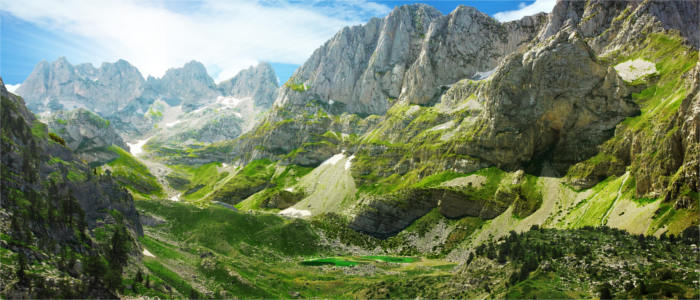
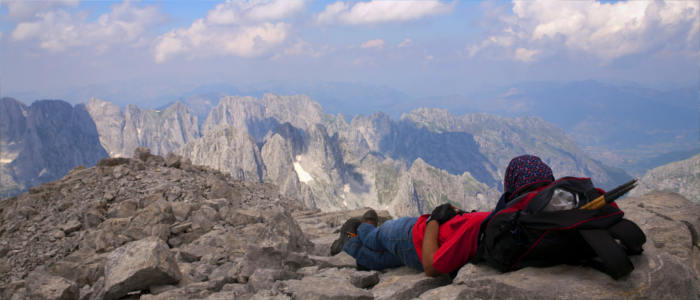
The Albanian alps, the name of which translates to the “Accursed Mountains” due to their rocky, untamed terrain, offer breathtaking views in one of the most remote areas of Europe. Jagged peaks, snow-capped mountains, and unbelievably crystal clear waters all reward the intrepid traveler who ventures into the north of Albania.

3. Albania is like a living time capsule
Traveling in Albania, you might get the impression that someone hit the “pause” button on Albanian culture in the 1950’s. Having been closed to the world for so long, the older generations still dress and live as they did 50 years ago. And while the cities have hardly changed in the last few decades, the villages have hardly changed in the last few centuries. It's a fascinating glimpse into a different pace of life that has largely been left behind in the modern world.

4. Albania offers a rich taste of the unspoiled Mediterranean
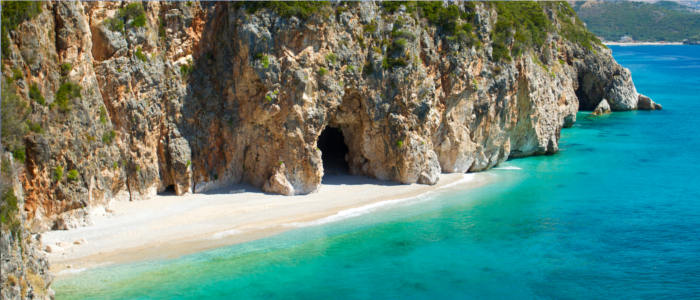
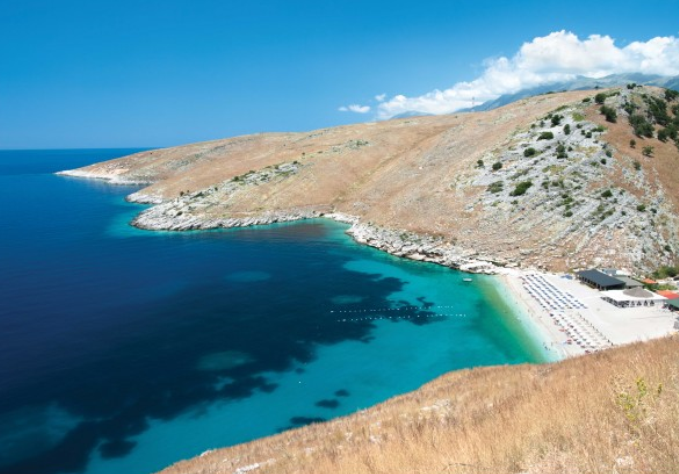
Like its famous neighbor Greece to the south, Albania borders the glittering cerulean waters of the Adriatic and Ionian seas. A rich span of coastline known as the Albanian Riveria boasts numerous quiet, undiscovered beaches all along the south of the country. The residents of coastal cities like Vlore, Sarande, and Dhermi easily enjoy some of the most beautiful beaches on the Mediterranean, and they have it all to themselves.

5. Albanians are kind and helpful
A few months ago, when my car blew a flat tire on the side of the road, a wonderful local man changed it in under ten minutes— and refused to be paid for his labor! Just last weekend I purchased some groceries from a local shop, but quickly realized I didn’t have enough money to pay for them all. Unfazed, the kind shopkeeper insisted that I take home the groceries anyway and bring back the money the next day. I am still blown away by their selfless generosity and willingness to help.

6. Albania is very safe
As a female traveler in Albania, I have always felt perfectly safe. Families and solo travelers alike are able to travel freely without being bothered. Albanians pride themselves on their hospitality, so foreigners are welcomed here. While travelers should always remain aware of their surroundings, Albania is definitely one of the safest places I’ve ever traveled in.

7. The amount of ancient history here is staggering
Having been occupied since pre-history, Albania has artifacts from thousands of years of some of the world’s greatest empires. Wandering through any town here, you might just stumble across ancient ruins from the Romans, Greeks, Byzantines, Venetians, Illyrians, Ottomans, and more! History buffs will definitely love the rich width and depth of historical sites and cultural influences found in this region of the world.

8. Albania proudly boasts multiple UNESCO World Heritage Sites
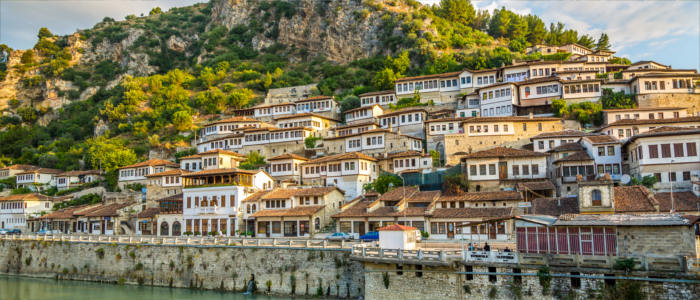
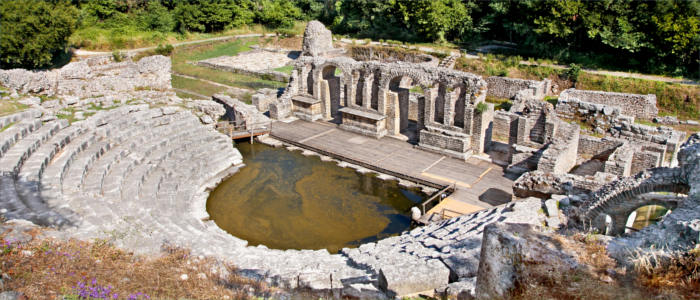
...including Butrint, an archeological site previously inhabited by the Romans and the Greeks, and Berat and Gjirokastra, two “museum cities” and fabulous examples of Ottoman architecture. Other Albanian sites currently in the UNESCO candidacy stages include the Durres Amphitheater, Lake Ohrid, and Apollonia, all of which are now undergoing repairs, promotions, or renovations.

9. Albania is a completely unique country
You will never visit another country like Albania. It is a beautiful contradiction of charm and grit alike, celebrating its very own unique heritage and history. It proudly claims the ancestry of celebrities like pop singer Rita Ora, actors Jim and John Belushi, and Mother Theresa. Albania even has its very own branch on the language tree, completely unrelated to any other language on earth! This is a unique country reserved not just for travelers, but for adventurers.
And last but not least, the most important reason to visit Albania…

10. Albania is emerging as a top tourist destination
..and is consistently landing high spots on international travel lists, such as Rough Guide’s “Top 10 Places to Visit in 2016.” Albania has also been dubbed the “best kept secret in the Mediterranean” by the UK’s Telegraph, and the “hidden bargain of the Balkans” by the Daily Mail. With the world gradually taking notice of the treasures Albania has to offer, I highly recommend you travel there before the secret gets out!

Author: Briana Averwater

12 July 2016

Business Insider: There is no better time to visit Albania than now

Locked between dramatic mountain faces and azure blue seas; it’s nothing short of a miracle that Albania hasn’t made it onto the mainstream tourist trail yet.
Shqipëria” to the locals, it’s known to its natives as the land of the eagles, a moniker adopted from folklore tales passed down from generation to generation. They tell of how a young Albanian saved an eaglet from certain death at the fangs of a venomous snake. And it’s that willingness to do things for others that sums up the spirit of the country.
Albanians are known for their hospitality, kindness, and affinity for knocking back glasses of homemade Raki. The days of communist dictatorship are a distant memory for all but a few. Albania is looking ahead to a brighter future. There is no better time to visit than now. 
The author of article, the blogger Tiny Rucksack suggest 5 places in Albania that everyone should visit. Here they are:
                                BERAT
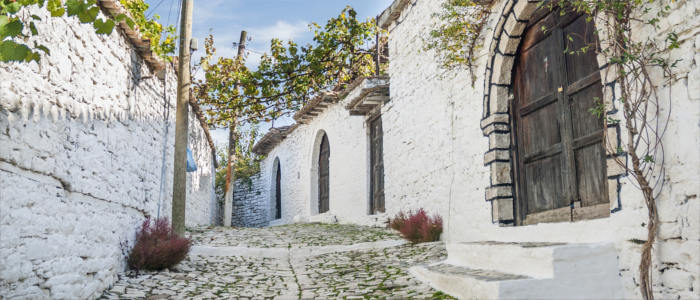
Tucked between the Tomorr mountain (which locals claim to be the resting body of a fallen giant) and the Osum river, Berat is the jewel in the crown of Albania. Home to 60,000 people, many of whom tell tales of being forced to work in the munitions tunnels carved by the Communist government into nearby hills. It’s a town of two halves – the winding medieval white-washed streets cut a course on the right bank of the river, while an altogether more modern settlement is the hub of the town on the left bank.
High above the town lies its castle – a fortress built to protect the town and her inhabitants from Byzantine raiders. Once it was a front line of wars between powerful empires vying for control. Now a slippery marble paved road keeps all but the most determined flip-flop clad tourists from reaching the top.Consecutive invasions of Berat have left the town with a mixture of architecture. The Turks brought their influence, as did the Communists. An interesting mish-mash of styles pleasing to the eye, and the camera.

                    Valbona National Park
Misty mountains and alpine streams dominate in this untouched corner of europe’s unexplored country. The traditional way of life is slowly changing in the steep-sided valleys. Farmers are turning their hand to hosting trekkers looking for adventure.
The region borders Kosovo, territory fiercely claimed by both Serbs and ethnic Albanians. It’s home to wild dog,  wolves, and some say bears. But don’t let this put you off. The mountains offer fantastic trekking, climbing and camping.

Albania is becoming a stoic pinpoint on the map for travellers from around the globe. New roads are being built, hotels are under construction, and the country is planning to build a second airport, at Kukës – development which’ll make getting to northern Albania much easier, and visiting a more attractive prospect.

                The “not to be missed” Lake Koman ferry
A ride along Lake Koman is only comparable to a trip on the Norwegian fjords. Bottle green trees meet the waters edge along the breathtaking route.  The landlocked lake through the ‘accursed mountains’ is actually a hydro-electric damn, but also forms part of an ancient route from Kosovo to Albania. The rickety ferry stutters into life several times a day, passing which scenery has to be seen to be believed.
photographers dream, the landscape could have been plucked from the Lord of the Rings trilogy. Mountains tower above the lake as it weaves its way to Fierza. It’s a route used by tourists and locals alike – meaning it’s a great chance to practice pigeon Albanian (or sit back, have a beer and take in the views). 
Lake Koman is the most scenic route to travel to the Valbona National Park from Shkodër. It has been described as “one of the world’s great boat trips”.

                                              Himarë
This sleepy fishing village on facing out toward the Ionian Sea remains relatively untouched by Aussie backpackers flaunting flip-flops and tales of far-flung lands. Sea food restaurants line the sea front enjoying unspoilt views over the town’s beach.
 Less than half an hour’s stroll away from the Xhiro is ‘Albania’s Ibiza’ – Jala. Toned men and bikini-clad women descend on the beach to drink at its bars, swim in crystal clear waters and ‘be seen’ during the summer month. It’s a world away from the serenity of the surrounding villages.
Reminders of Albania’s communist dictatorship past are ever present.  On a clear day the Greek island of Corfu is visible – too visible for those once in Tirana’s corridors of power awaiting an imminent invasion which never came. The now defunct fortifications line the roads leading between the coastal towns and villages.

                                         Tirana – the capital city
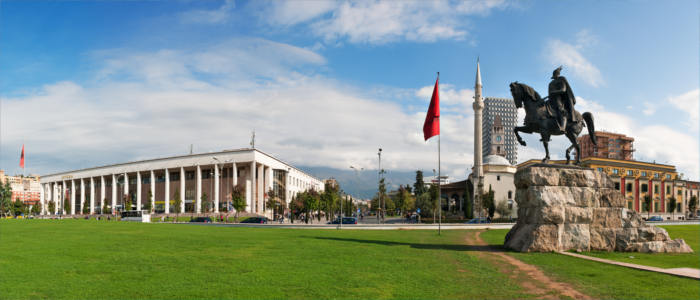
Probably Europe’s weirdest capital city. At first glance Tirana doesn’t have a huge amount to offer a wondering soul, but its quirkiness makes it worth at least a day stop-off. The International Center of Culture (or the Pyramid of Tirana) tops the Albania’s list of the weird and wonderful. Opened in October 1988 was intended to be a museum to Enver Hoxha – the leader of Albania’s communist cult. The pyramid new sits empty and derelict. It’s an ad hoc climbing frame for plucky locals and tourists hoping to get that “perfect selfie”.
Tirana of the centre of Albanian life. Smartly dressed men and women weave their way between the chaotic traffic like in any other European capital. It’s the home of the country’s night life, especially the Blokku area, a section of town formerly reserved for the country’s elite.


Read article here: 

06 July 2016

Exploring ancestral lands- fascinating Albania


"Traveling in the ancestral lands of Alexander the Great, I recently explored the unique sights found in the Balkan countries of Macedonia, Albania and northern Greece.
The three Balkan countries I visited preserve a tremendous amount of antiquity and ancient history, as they all have very rich heritages..

Our journey from Greece took us across the border to fascinating Albania, which was the most isolated and closed country in the world following World War II.
Its brutal Communist dictator had closed its borders, and his irrational fear of an invasion led him to construct an unbelievable number of 700,000 small bunkers, plus tunnels, to allegedly protect his population. I have never seen such a weird sight as these bunkers still lining the highways and its cities.

Stunning Ottoman-style homes, ancient fortifications
In Albania, we spent two evenings in the UNESCO world heritage city of Gjirokaster, a very old historic town on a steep hillside containing several Ottoman-era mansions with stone slate roofs and crowned by a massive 15th century castle.
We visited its Ottoman bazaar dating from the 17th century. Later we toured the town of Berat, containing stunning Ottoman-style homes and a 2,500 year old fortification.

Tirana, Albania's capital, was our next destination. It is a fairly modern city with wide boulevards, parks and high rises.
Here we learned about the turbulent history of the country that included 400 years of occupation by the Ottomans, Italians and Nazi's during WW II, and the 45 years of a Communist dictatorship."


 "Exploring ancestral lands", is an article published in Sun Times by Dave Pattison also known as “The Marco Traveler". The author choose these 3 places Albania, Greece and Macedonia to write about in his last article for the Sun Times."This is my last article I will write for the Sun Times, which is ceasing publication, and I hope readers have enjoyed learning about places known and unknown, and have gained an understanding about unique and varied cultures that can be discovered around the world", he wrote.


Read full article:


23 June 2016

Albania - 1,000 windows and invaluable cultural assets

Long underrated and finally recognized - Albania is one of the most beautiful travel destinations in south-eastern Europe. A wild and romantic natural landscape, countless ancient cultural sites and the touch of the Mediterranean climate make the country at the Adriatic Sea increasingly popular.

Geography - 300 sunny days in Albania
The idyllic country of Albania lies on the Balkan Peninsula between Montenegro and Kosovo, Macedonia and Greece. In addition, the south-eastern European country is enclosed by the Adriatic and the Ionian Sea. It is divided into twelve qarks (prefectures) and the capital of Tirana. Besides Tirana, popular travel destinations are Sarandë at the Ionian Sea as well as Vlorë and Durrës at the Adriatic coast. Albania prides itself on having no less than 300 sunny days per year. The climate is warm and it only gets colder in winter. July is the warmest month with an average temperature of 24 °C.

Nature - Wild beauty
From the sea to the high peaks of the mountains, Albania fascinates with wild natural beauty. Untouched sandy and pebble beaches at the coast, which is 362 km long, secret lagoons, juicy valleys and the fertile hilly landscape extend in front of the panorama of the breathtaking Albanian Alps. Most travellers are overwhelmed by the unspoiled and diverse variety of landscapes. The country is still an insider tip and surprises many holidaymakers. With regard to natural diversity alone, Albania has a lot to offer. It lies in the center of the Blue Heart of Europe and has a great share in the European Green Belt. You see palms, orange trees, almond trees, laurels, pines and olive trees between the oak forests, which create the country's Mediterranean charm. The forests are home to wolves, lynxes, deer and kites and you can watch loggerhead sea turtles at the coasts. Furthermore, countless migrating birds come to the island every year. Besides the attractive coast, the deep blue mountain lakes and the vast river landscape, Albania impresses with its Alpine landscape. Its highest peak is Mount Korab with a height of 2,764 metres.

Natural sights - Secret beaches and untouched national parks

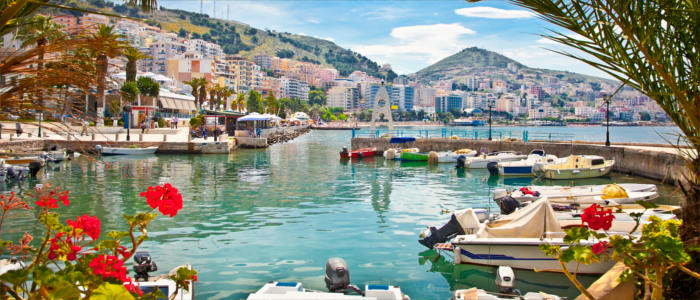
One of Albania's greatest attractions is without doubt the Albanian Riviera. This harsh but magical cliff coast, which is waiting to be discovered, is located at the coast of the Adriatic Sea. Numerous holidaymakers visit the wonderful beaches at the Adriatic Sea and enjoy the crystal clear water, especially in the warm summer months. Despite this, the beach sections are not overcrowded and you will easily find a cosy spot to have to yourself. Nevertheless, the coastal towns have adjusted to tourism and offer everything travellers could desire. There are over a dozen spectacular national parks, some of which have hardly been developed. In the Theth National Park in the far north, visitors can explore the steep mountains and the Grunas Waterfall along exciting hiking routes.

Culture - A top travel destination catches up
Albania's history dates back to the Illyrians. For a long time, the region was part of the Ottoman Empire. Many inhabitants of Albania are Muslims to the present day and you see Muslim buildings and mosques all over the country. Albania is generally rich in history with many traditions and a wide range of cultural sites and activities, which is becoming increasingly interesting for tourists. The latter is a rather new development. Albania only gained the possibility to develop with regard to many areas including tourism after the Communist regime had been brought down in 1990. Up to that point, the country was nearly inaccessible to visitors. Albania's efforts to catch up in this sector soon proved fruitful and the number of people who visit the attractive travel destination increases every year. It was recently added to the top list of the best travel destinations worldwide by the New York Times. Travellers especially value its numerous ancient buildings, the incredibly wild and romantic nature and the charming inhabitants.


Cultural sights - 1,000 windows and invaluable cultural assets
The colourful capital of Tirana is only 30 kilometres away from the sea and offers a variety of appealing sights. Travellers particularly enjoy the coastal towns. The placid city of Vlorë is a popular bathing resort in summer and impresses with its wonderful Kaninë Castle. The Mediterranean bathing resorts of Sarandë is equally popular. Due to its countless small alleys and winding paths, the city of Korçë is also called the "Paris of Albania". Other impressive sights are the ruins of the ancient city of Apollonia, which had over 60,000 inhabitants during its time of prosperity. Near the seaport city of Durrës, you see the ruin of an ancient amphitheatre. The ruins of Butrint and the "Town of a Thousand Windows", Berat, have been declared UNESCO World Cultural Heritage sites. Berat is a Balkan-Ottoman town with a magnificent medieval castle and is frequently visited. The same is true of the medieval Krujë Castle in the city of the same name and the Skanderberg Museum. Travellers who are interested in Venetian architecture should not miss out on Shkodër's old town.

Experience - Between medieval villages and party nights
Albania's Mediterranean Balkan cuisine displays influences from Turkey, Greece and Italy. Fish and chicken are popular. Some of the most common dishes are byrek, biftek and lokum. The national drink is rakı. The latter is mostly drunk in the evening hours, when Albania's nightlife starts. Tirana and the well-known coastal towns are vibrant with activity every night. Locals and travelers populate the streets at night in a cheerful and social mood. In some places, roads are closed to car traffic, so that passengers can walk from bar to bar, into the next trendy restaurant or the latest night club. The venues are often opened until the early morning hours and make long party nights possible. During the day, visitors can go for a stroll along the wide boulevards and buy one or two reasonably priced souvenirs. If you do not find anything there, you should visit the bazaar in Krujë. Relaxation is offered by the Turkish bath, which is also located in Krujë.

Activities - Conqueror of the mountains
Climbing and mountaineering in the Albanian Alps is still a real adventure. Some peaks have never been climbed before and are waiting to be conquered. Travelers who want to explore Albania in a more relaxed way can experience the country's natural beauty along scenic hiking routes. Since the tourism sector is only starting to develop in many areas, travelers are often on their own when it comes to organizing their leisure time. One exception is rafting in the Osumi River canyon. Exciting tours are being offered from March to June. In addition, holidaymakers can explore Albania in a cross country vehicle and visit the neighboring countries. The Greek island of Corfu, for example, is located at the most narrow point of the Ionian Sea and is only two kilometres away from Albania.

Information
Travellers reach Albania by plane or car. In addition, there is a ferry which travels from Italy to Albania. Arriving by train is not possible at the moment. Within the country, you best use the bus network. If you want to drive yourself, you should note that the roads are in a very bad condition in several parts of the country.
Slowly but surely Albania is developing into one of the most beautiful travel destinations in Eastern Europe. Its untouched nature, the wonderful, varied cities and the friendliness of the inhabitants make Albania increasingly popular in the world of travel.


16 June 2016

The Guardian Travel: The beautiful sceneries of North of Albania


Staggering scenery, deserted landscapes – crossing Lake Koman in northern Albania provides an insight into a country that's still off the tourist radar. This is how “The Guardian” describes the Northern Albania, dedicating a great attention to Lake Koman, Valbona Valley, Albanian Alps and city of Shkodra. “The Guardian” compares the city of Shkodra that looks like a city in Italy. Albania it’s not only known for its beautiful sceneries and culture, but also for its hospitality, mentioned as well on this article “If helpfulness and hospitality were a marketable resource, Albania would be rich.”

The surface of the lake is perfectly still. The steep hills on either side and the high mountains beyond are empty of human life, save for the occasional lonely farmstead embedded in the hillside. There are no visible roads, no telephone wires to connect this place to the outside world. It's not difficult, on the ferry journey along Lake Koman in northern Albania, to imagine you're drifting through a landscape that has lain undisturbed for centuries.

It's the height of summer but there aren't many people on the ferry either. Most of our fellow passengers on this hulking cargo ship are down below, smoking and drinking lethally strong coffee in the bar. They've seen it all before. Those who haven't – my girlfriend and I, a few backpackers and some tough-looking Czech bikers – are on the upper deck drinking in the staggering scenery.

Anywhere else in Europe, this two-hour journey (which our guide book describes as "one of the world's great boat trips") would be hopping with tourists, but Albania is not a big draw – at least not yet. The last century has been hard on this little country, just across the sea from Italy and just north of Greece. More than 40 years of communist rule under the isolationist dictator Enver Hoxha, followed by a ruinous period of extreme capitalism in the mi
d-90s, have left the country struggling to find its feet in the new millennium.

Our first port of call had been Shkodër, the largest city in the north, overlooked by an impressive medieval castle built by Venetians, and crisscrossed by wide communist-era boulevards. When its population emerges in the evening to promenade and gather outside cafés, you could imagine you were somewhere in Italy – until you hear a muezzin's call from one of the city's many mosques, or fix your eye on a building that looks like it was transplanted from 1950s Moscow.

We planned to strike out the next morning for the Albanian Alps in the north-east. The best way to get there, if you want to avoid a long, precarious road journey, is by the Lake Koman ferry. But we had no idea how to get to the lake, couldn't find an information office, and even the guidebook was sketchy on the subject. Eventually a taxi driver with a few words of English called a friend and arranged for us to be picked up early the next morning. This was typical of our experience. Ask someone on the street and, even if they can't help, they'll find someone whose second cousin definitely can. If helpfulness and hospitality were a marketable resource, Albania would be rich.

See full article: http://www.theguardian.com/travel/2012/apr/15/albania-lake-koman-killian-fox?CMP=share_btn_tw

13 June 2016

National Geographic: Why to go in Albania

Over the past years Albania is attracting the attention to worldwide known travel magazines and media. This time the National Geographic has listed Albania among 10 Places that deserve more travelers. Firstly they describe the situation on the ground. “For decades, Albania was among southeastern Europe’s least visited—and least accessible—countries. A virtual fortress under the isolationist tactics of communist dictator Enver Hoxha (who spent four decades building over 700,000 needless, and largely useless, defensive bunkers across the country), Albania collapsed into chaos after Hoxha’s death in 1985 and the subsequent fall of the U.S.S.R”.

And after that they present Albania how it is today, Albania is no less safe than its more well-trodden Adriatic counterparts. A burgeoning tourist industry—centered around its meticulously preserved UNESCO-listed Ottoman towns, including Berat and Gjirokastra, and the stretch of land now known somewhat archly as the Albanian Riviera
Butrint
, —now brings in almost 3.5 million tourists a year. This article reveals Albania how it really is and the reason why go now.

Why Go Now: While Adriatic beaches in nearby Italy and Croatia have largely been transformed into crowded, hypermodern resort complexes, Albania’s coastal beaches, dotted with ruined Greco-Roman amphitheaters and whitewashed, icon-filled Orthodox churches, are among the few in Europe where it’s possible to stretch out on the shoreline, even during high season. South of Vlorë, the somewhat concrete-feeling coastal hub, ethnically Greek villages like Dhërmi, Vuno, and Himarë—with terrace cafés, waterside squid-hawking fishmongers, and narrow pedestrianized pathways—are inundated with family-run B&Bs that go for as little as $25 a night. Travelers from outside the Balkans are still rare but vigorously welcomed. Don’t be surprised if your B&B host insists on taking you on a dizzying motorcycle tour along the coastline or challenges you to a staggering rakia-drinking competition.

National Geographic has listed which places you shouldn’t miss in Albania, such as: Butrint, the city of Saranda, Byzantine basilicas, and Roman mosaics etc.

See full article: http://www.nationalgeographic.com/travel/features/ten-places-that-deserve-more-travelers/

09 June 2016

"Corriere della Sera" promotes the most beautiful beaches in the southern Albania

The prestigious Italian newspaper "Corriere della Sera", has dedicated a long report on the beaches of southern Albania. The journalist Francesca Masotti has visited beaches of Albania and has collected 15 amazing pictures captured in Albanian coastline. The article reveals beaches that are still intact, crazy backdrops, good food and low cost. Albania should be your travel destination 2016: close, new, with accommodation and services that is reaching fast the standards of the rest of Europe.
"Who would have thought that Albania would become one of the European summer destinations of the moment, making his debut for the first time this year in the catalogs of many tour operators? Moreover in recent years the country of eagles has been reborn: young, dynamic and creative, and unspoiled nature. The area so praised by the famous Australian publisher is located in the south of the country: the mountains near the sea, clear water and unspoiled nature. If you want to visit a different place, to hunt for alternative destinations and low cost, relaxing and where you eat well with a few euros, Albania is the place for you.

She described the most beautiful beaches of Albania, starting from Karaburun peninsula, still pristine and uninhabited, with some amazing places to discover such as haxhi Aliu Cave, so called Pirate Cave, and the stunning view of Sazan island, former military fortified islet now open for tourists.
Other beaches recommended to Italian tourists are Dhermi; Jale, Humara, Potami, Livadhia,  Porto Palermo, Borsh and the beautiful Ksamil, considered the Pearl of Ionian Sea located in Saranda region. She describes Saranda as the Rimini of Albania.
Behind Ksamil lies the Butrint National Park, one of the most beautiful archaeological parks in the Balkans, UNESCO World Heritage Site that takes you to discover the ancient history of this beautiful country still little known.